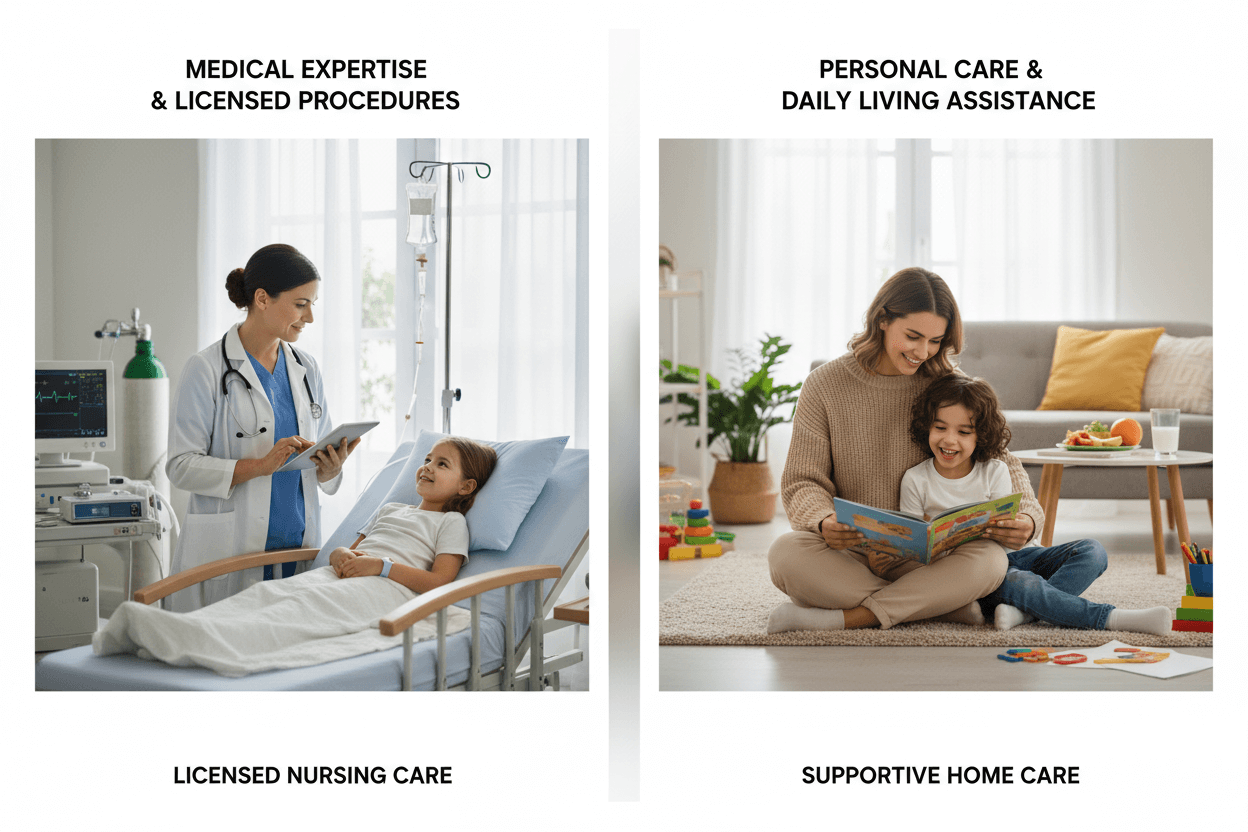
Both skilled nursing and non-skilled care play significant roles in supporting a child’s daily life. For parents, understanding the difference is the key to making confident decisions, ensuring your child receives the proper assistance at the appropriate time.
Below is a breakdown of what these services mean, how they differ, and how they apply to families in Georgia.
What Skilled Nursing Care Means for Children
Skilled nursing care refers to professional services offered by licensed pediatric nurses who are medically trained. Children with complex medical needs or those requiring continuous monitoring rely on this level of care to remain safe and stable at home.
Qualified pediatric nurses (RNs and LPNs) are licensed professionals. They apply their training to tasks that demand clinical judgment and medical experience. Families choose skilled nursing when a child’s condition requires precise, regular attention that cannot be safely performed by non-clinical caregivers.
Common Skilled Nursing Tasks
Skilled nursing services often include:
- Tracheostomy care and suctioning
- Oxygen support and respiratory treatments
- G-tube or J-tube feeding and maintenance
- Administration of prescribed medications
- Seizure monitoring and management
- Central line care
- Wound care and dressing changes
- Skilled assessments of physical changes
These tasks require medical knowledge because errors can lead to serious complications. Skilled pediatric nurses provide accurate care that protects the child’s health and helps prevent unnecessary hospital visits.
When Children Typically Need Skilled Nursing
Families typically seek skilled nursing when a child has a medical condition demanding expert attention. This often includes premature infants with chronic lung issues, children with cerebral palsy requiring tube feeding, or those with seizure disorders needing constant observation.
Skilled nursing is essential for children with:
- Neurological conditions
- Respiratory disorders
- Mobility-related medical complications
- Post-surgical recovery needs
- Genetic or metabolic conditions
- Medically fragile diagnoses requiring constant observation
Choosing skilled nursing helps families manage complex medical routines with peace of mind, ensuring every treatment is completed safely.
What Unskilled (Non-Medical) Home Care Means
Non-skilled home care—often referred to as personal care or unskilled care—focuses on daily living support rather than medical treatments. Despite the technical term “unskilled,” this type of care is vital. It assists children with personal needs and activities that do not require a nursing license but do require a trained, compassionate hand.
Non-skilled caregivers are trained professionals who provide companionship, supervision, and assistance with Activities of Daily Living (ADLs).
Common Non-Skilled Care Tasks
Non-skilled pediatric caregivers often help with:
- Bathing and grooming
- Dressing
- Diaper changes and toileting
- Feeding assistance (for children who can safely eat by mouth)
- Light mobility support and transfers
- Playtime supervision
- Comfort routines
This type of care supports parents who need help managing the physical demands of caregiving, especially for children with developmental delays or limited mobility.
Skilled vs. Non-Skilled Home Care: The Main Differences
Parents often compare these two types of care when planning long-term support. Each service fills different gaps in a child’s routine. In Georgia, the distinction also affects eligibility for programs like GAPP (Georgia Pediatric Program), which reviews medical documentation to confirm if a licensed nurse is necessary.
Quick Comparison
Skilled Nursing Care:
- Provider: Licensed Nurses (RN, LPN)
- Primary Focus: Medical treatment and clinical judgment
- Tasks: Ventilator care, tube feeding, medication administration, wound care
- Goal: Medical stability and health management
Non-Skilled (Personal) Care:
- Provider: Certified Nursing Assistants (CNA) or Personal Care Aides
- Primary Focus: Daily living tasks and hygiene
- Tasks: Bathing, dressing, oral feeding, mobility support
- Goal: Comfort, hygiene, and routine support
Both types of care can work together. Many families combine skilled nursing for medical tasks with non-skilled care for daily support, creating a balanced routine that improves the entire family’s quality of life.
Types of Care Professionals That Support Children in Georgia
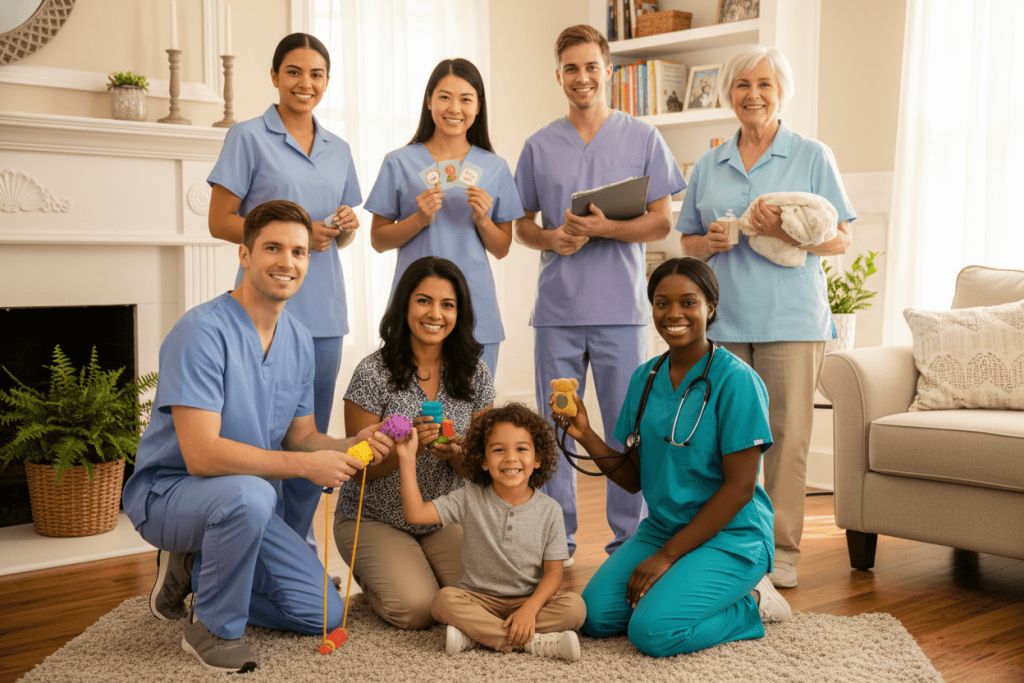
Parents need to know the differences between the professionals entering their home. Here is the hierarchy of care providers:
Registered Nurses (RNs)
RNs are licensed to perform high-level clinical tasks. They assess medical conditions, manage complex equipment (like ventilators), administer medications, and coordinate overall care plans. In pediatric home care, RNs often support children with the most serious medical conditions requiring advanced oversight.
Licensed Practical Nurses (LPNs)
LPNs are trained and licensed to perform many nursing tasks under the direction of an RN or physician. They handle daily medical routines, monitor patient stability, and manage equipment for children who need skilled care. Many families work closely with LPNs for their day-to-day shifts.
Certified Nursing Assistants (CNAs)
CNAs provide non-skilled support. While they are not licensed nurses, they are certified professionals trained to assist with personal care, mobility, hygiene, and daily routines. They provide the “hands-on” help that benefits children who need basic assistance but do not require medical treatment.
How Families Choose the Right Type of Care
When deciding on care, parents must consider the child’s specific diagnosis, physician orders, and daily challenges.
- A child with a feeding tube or respiratory equipment will almost always require Skilled Nursing.
- A child who needs help with hygiene, meals, or mobility may do well with Non-Skilled Care.
Other factors include:
- Frequency of medical interventions
- Safety concerns (e.g., risk of aspiration or seizure)
- Physician recommendations
- Eligibility for state programs like GAPP or Medicaid waivers
Understanding these differences allows parents to advocate for the most supportive environment for their child.
Why SLB In-Home Care Is a Strong Choice for Georgia Families
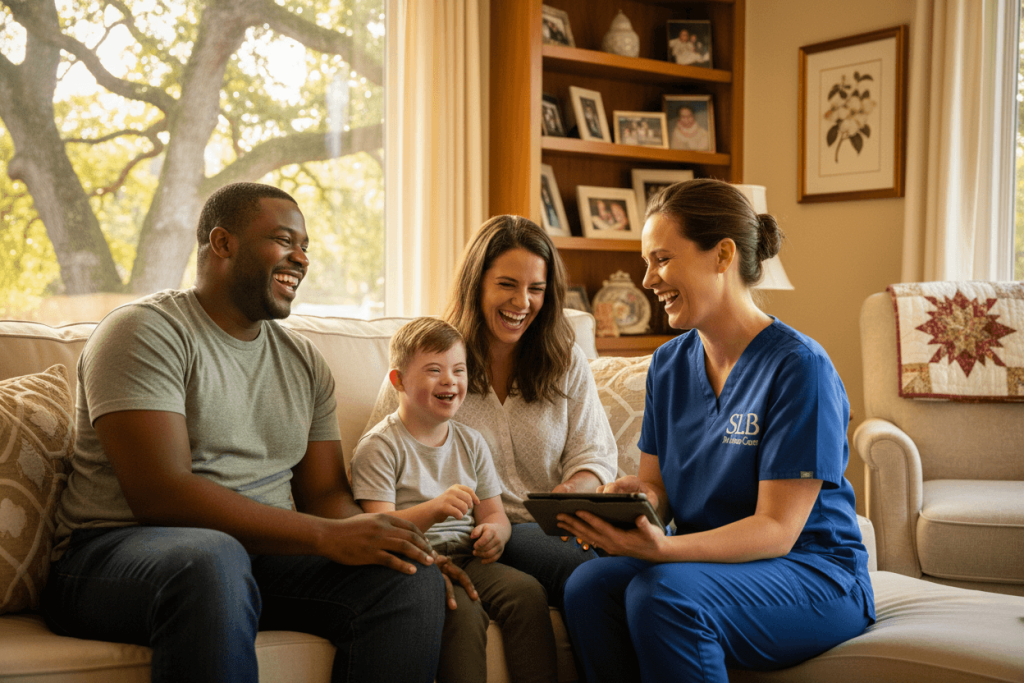
Parents in search of a dependable and compassionate provider in Georgia often turn to SLB In-Home Care because of our commitment to clinically safe, child-focused support.
The skilled pediatric nurses at SLB In-Home Care understand the unique medical and emotional needs of medically fragile children. We offer care that feels both professional and personal. Families appreciate having a team that responds quickly, coordinates with physicians, and adapts to each child’s evolving care plan.
SLB In-Home Care is a reliable partner that balances clinical priorities with the nurturing structure children need. Our focus remains on personalized attention, safety, and a level of compassion that helps families feel supported throughout their journey.