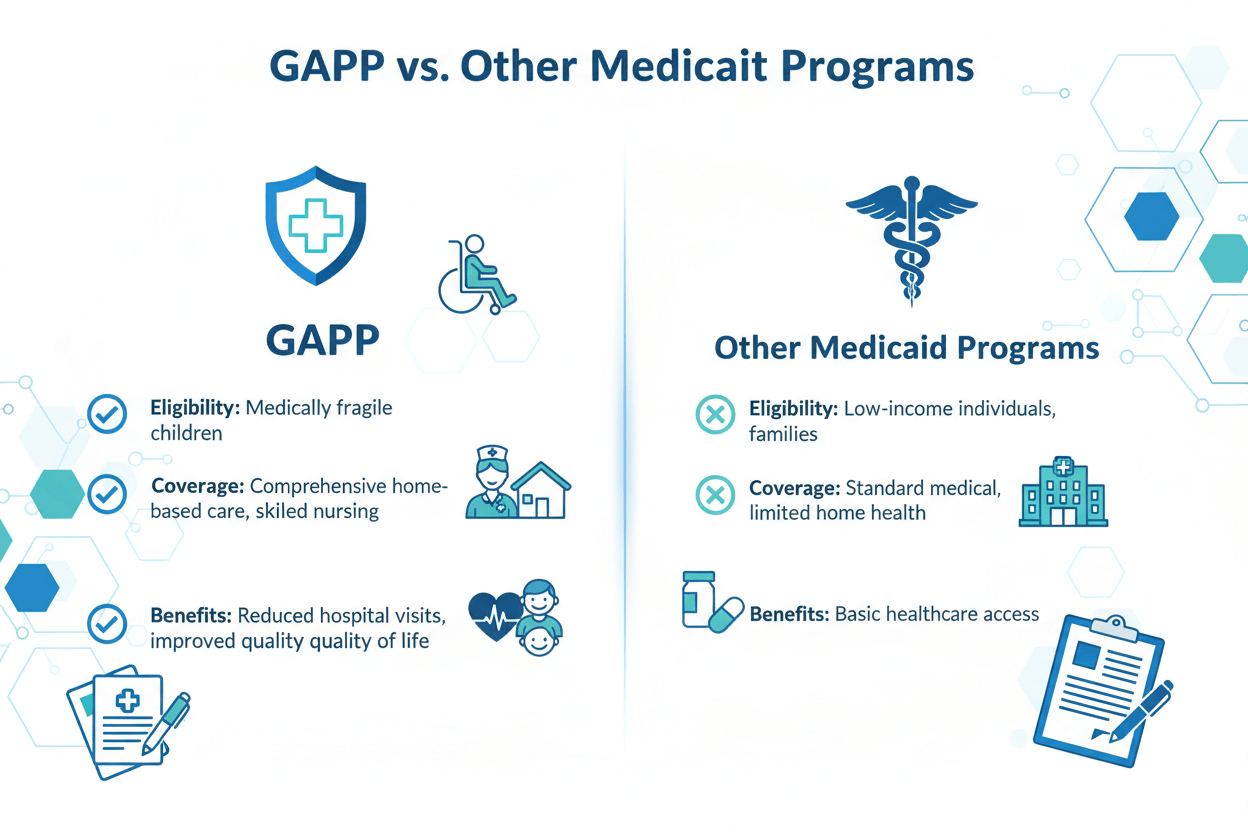
Families caring for medically fragile children often find themselves navigating a maze of Medicaid options, each offering different types of support. Among these programs, the Georgia Pediatric Program (GAPP) stands out because of its specific focus on clinical safety and ongoing in-home nursing.
Many parents compare GAPP with Medicaid waivers or other pediatric Medicaid programs in Georgia but are unsure which option meets their child’s needs most effectively. Understanding how these programs differ helps families choose long-term care that keeps their child safe, stable, and supported at home.
What GAPP Provides That Other Medicaid Programs Do Not
GAPP was created specifically for children who require skilled nursing or personal care due to complex medical conditions.
Unlike traditional Medicaid waivers that prioritize community living support, respite services, or developmental disabilities, GAPP directs its services toward preventing medical emergencies.
The heart of GAPP lies in its ability to deliver skilled nursing directly inside a child’s home. This makes a major difference for families whose child relies on:
- Respiratory devices (Ventilators, BiPap/CPap)
- Feeding tubes (G-tubes, J-tubes)
- Seizure management
- Cardiac monitoring
- Tracheostomy care
While other programs focus on social support, GAPP focuses on real-time medical stabilization. Nurses monitor vital signs, manage equipment, and identify early warning signs to prevent the complications that lead to hospital visits.
GAPP vs. Medicaid Waivers: What is the Difference?
Medicaid waivers in Georgia (such as NOW, COMP, SOURCE, or ICWP) cover a broad range of non-clinical support services. They are excellent for improving independence and community involvement, but they are not designed for children who require ongoing medical intervention.
How GAPP Fits Within Georgia’s Larger System
Georgia offers several Medicaid programs, and it is possible for them to work together. However, it is vital to understand that other programs do not replace the skilled nursing that GAPP provides.
1. The Katie Beckett Deeming Waiver
Many families confuse this with GAPP. Think of Katie Beckett as the “Door” and GAPP as the “Room.”
- Katie Beckett allows children to qualify for Medicaid based on their disability, regardless of their parents’ income.
- Once the child has Medicaid (via Katie Beckett), they can then apply for GAPP to receive nursing services.
2. Medicaid EPSDT
This focuses on preventive checkups and standard medical services (doctor visits, glasses, dental). It does not cover daily in-home nursing shifts.
3. NOW and COMP Waivers
These support individuals with intellectual or developmental disabilities. While helpful for behavioral support or day programs, they do not provide the Registered Nurses (RNs) or LPNs needed for complex medical care.
Why GAPP Is Often the Best Fit for Medically Fragile Children
Children who live with chronic, life-impacting conditions need care that goes beyond daily assistance. They require clinical monitoring that responds quickly to changes in breathing, neurological activity, or feeding tolerance.
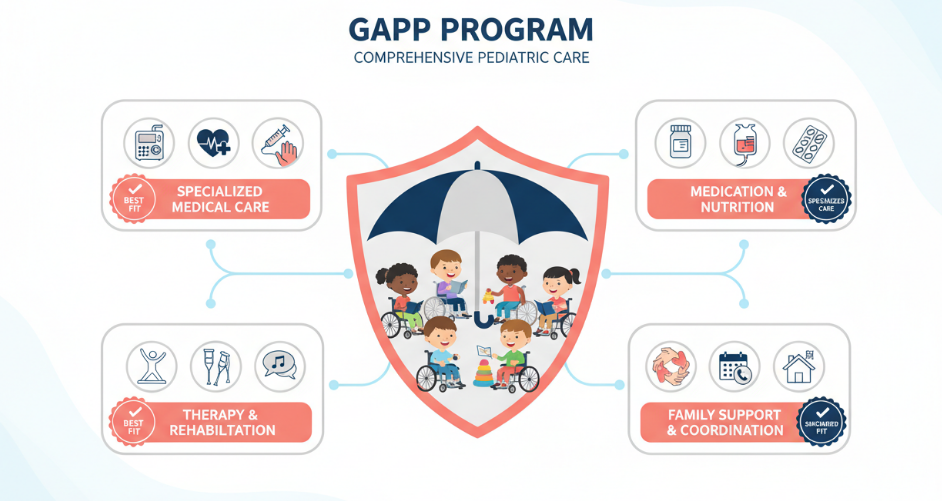
GAPP fills this gap.
Parents experience fewer emergency situations because nurses recognize early signs of distress and manage them at home. Associated benefits include:
- Stability: Children remain in familiar surroundings, supporting emotional comfort.
- Routine Support: Nurses help maintain feeding schedules, medication timing, and hygiene.
- Physician Collaboration: GAPP nurses act as the eyes and ears of the doctor, communicating changes before they become emergencies.
How SLB In-Home Care Helps Families Navigate These Choices
Families across Georgia seek providers who understand the complexities of GAPP and how to coordinate care within the Medicaid system. SLB In-Home Care supports families from the very first step.
Parents appreciate receiving help with:
- Gathering the right documentation.
- Communicating with physicians to get orders signed.
- Understanding which Medicaid programs can work together.
The skilled pediatric nurses from SLB In-Home Care are trained to deliver dependable clinical support. We help stabilize your child’s condition, manage complex equipment, and build predictable routines. By blending professional oversight with compassionate care, we give families the reassurance that their child’s needs are consistently met.
Not sure which program is right for your child? You don’t have to guess. Contact SLB In-Home Care today, and let us help you understand your options and advocate for the care your family deserves.