Trach and Ventilator Nursing
Pediatric Trach and Ventilator Care at Home in Georgia
Skilled pediatric nurses who help your child breathe safely at home, so you can rest, work and be a parent again.
Enrolled GAPP Provider
College Park, Georgia
RN + LPN
Trach and vent trained
01 / Overview
What Trach and Ventilator Nursing at Home Means
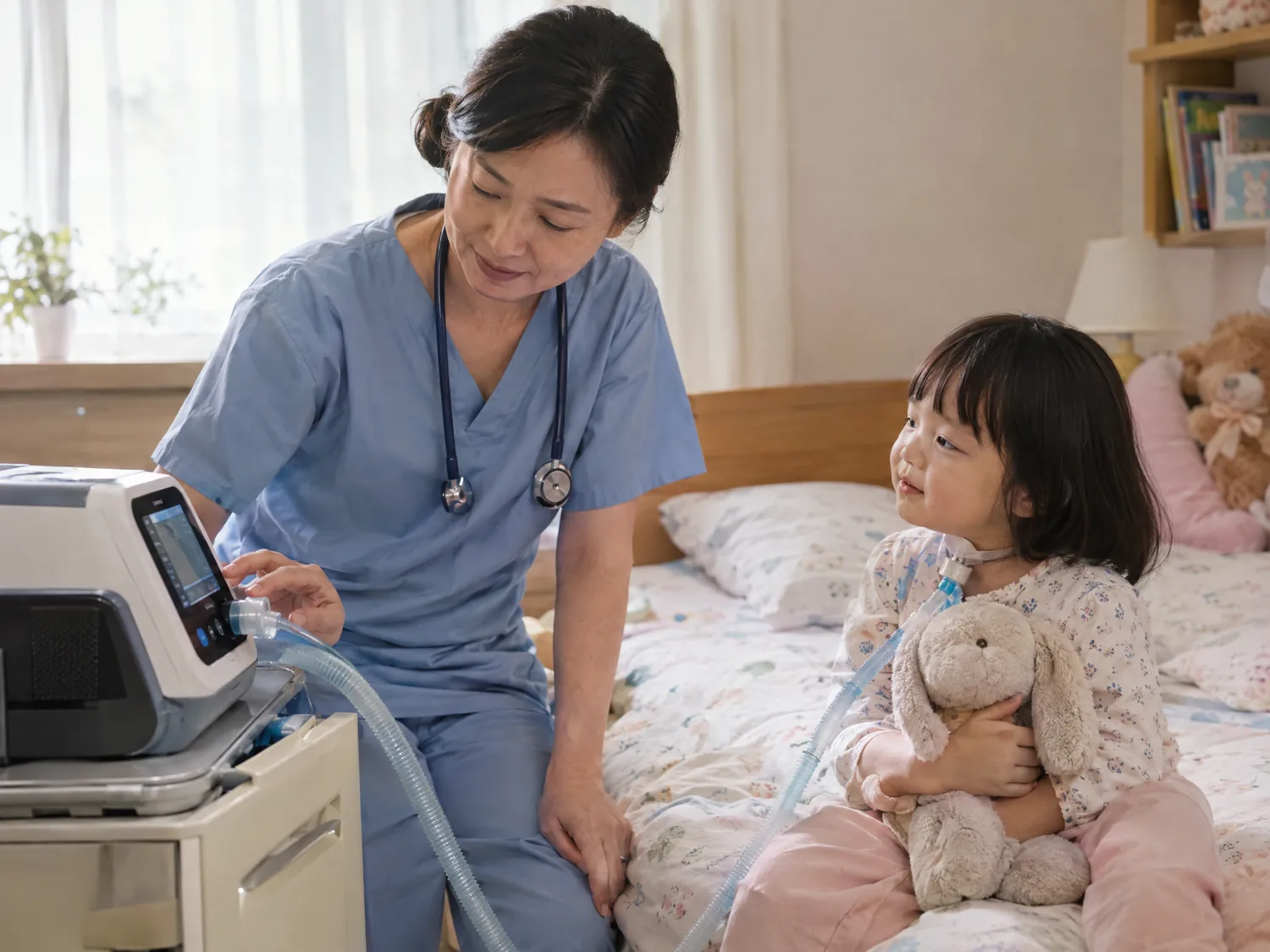
A child with a tracheostomy breathes through a small tube placed in the neck. Some children also need a home ventilator for part or all of the day. Keeping that airway clear and that machine working is skilled, hands-on work that cannot pause.
Pediatric tracheostomy nursing brings a licensed nurse into your home for scheduled shifts. The nurse follows your child’s physician orders, watches breathing closely, and handles routine airway care so you are not doing it alone around the clock.
02 / Daily Care
What Your Child's Nurse Helps With
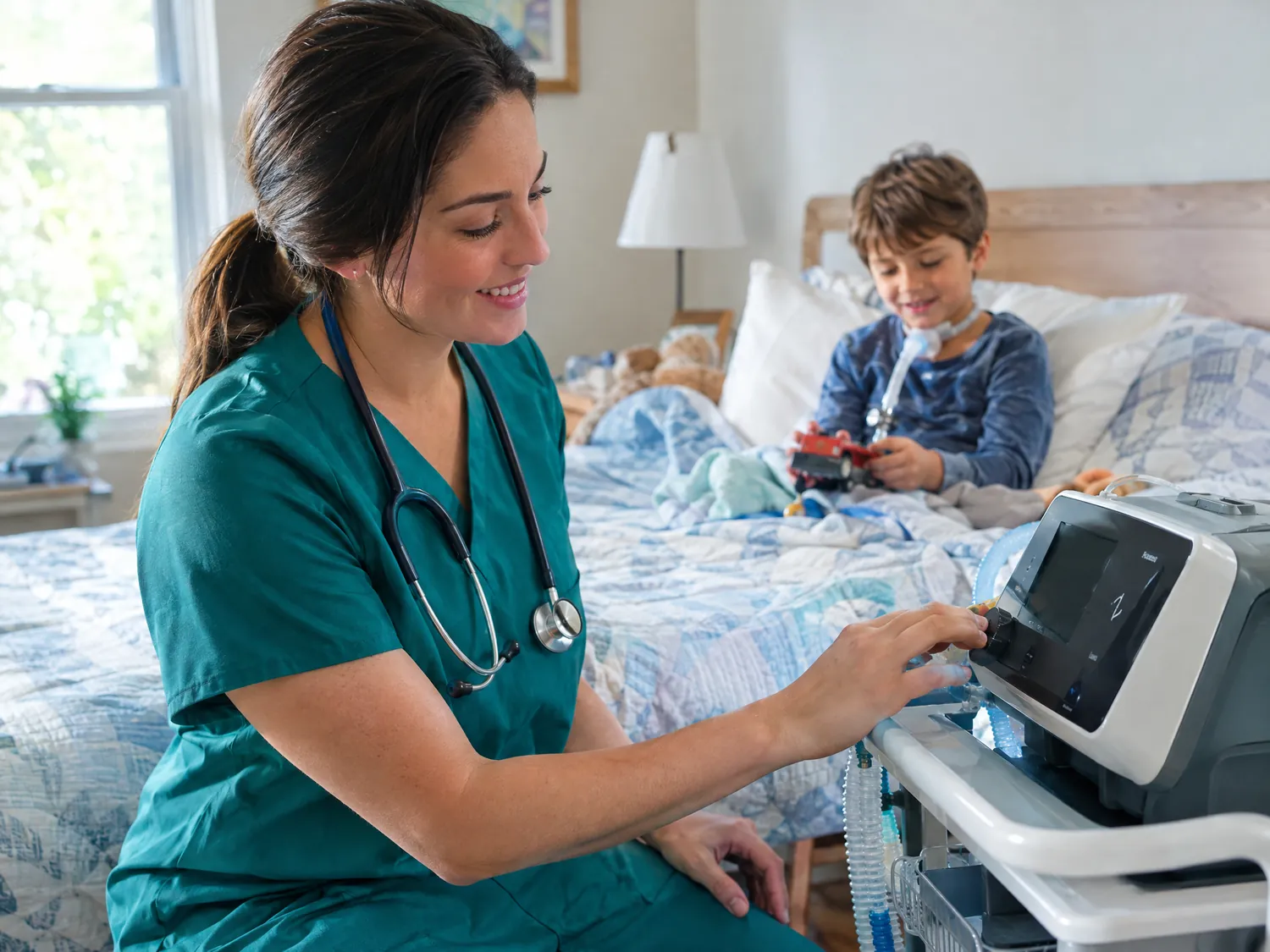
Every task follows the plan written by your child’s doctor and respiratory team. Nurses do not change settings or routines on their own.
01
Suctioning and Airway Clearance
Suctioning the trach as needed and as ordered, watching secretions, and noting changes in color or amount for the care team.
02
Stoma Care and Trach Ties
Cleaning the skin around the stoma, checking for redness or irritation, and changing trach ties per orders, usually with two trained people.
03
Humidification and Oxygen
Keeping humidity in place so secretions stay thin, and giving oxygen at the prescribed flow when ordered.
04
Ventilator Monitoring and Alarms
Checking ventilator settings against orders, responding to alarms, and watching pulse oximetry, breathing effort and color.
05
Emergency Readiness
Keeping a spare trach, a smaller size, suction and a manual resuscitation bag ready, and being trained for an emergency trach change.
06
Feeding Coordination
Coordinating feeds, including G-tube feeds when ordered, around suctioning and positioning so your child stays comfortable and safe.
03 / Your Care Team
Who Provides Your Child's Care
Care is provided by licensed registered nurses (RNs) and licensed practical nurses (LPNs) who focus on pediatrics and are trained in trach and ventilator care. Your family takes part in choosing the nurse, and you can ask for a different nurse.
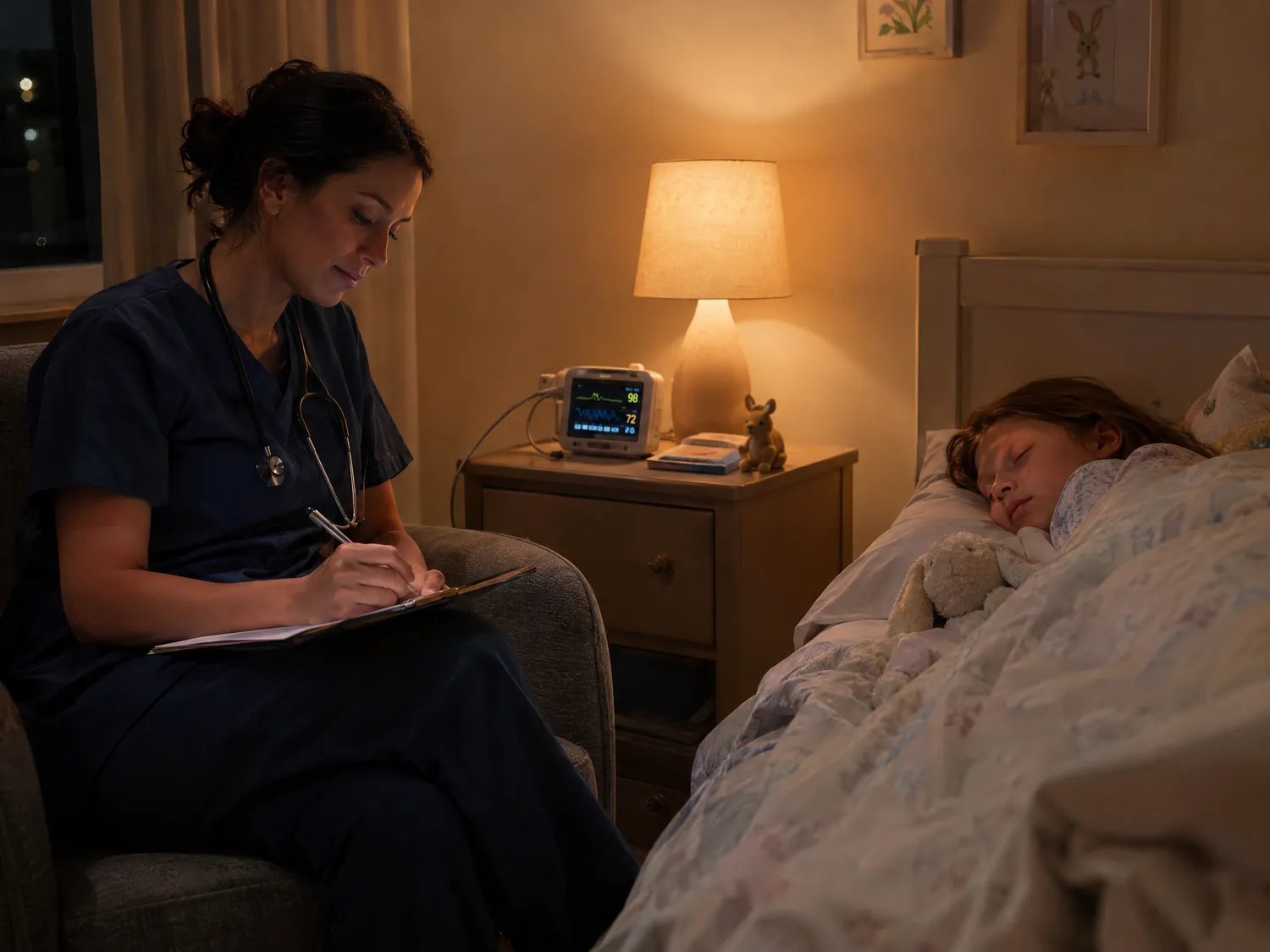
We schedule day, overnight and respite shifts around your family’s routine. Overnight nursing is often where parents feel the biggest difference, because someone trained is awake and watching while you sleep.
- Pediatric focused RNs and LPNs
- Matched with your input
- Day, overnight and respite shifts
04 / Hospital to Home
Going Home From the Hospital or PICU
Discharge with a trach or ventilator takes planning. Calling us before discharge gives the paperwork time to move.
01
Talk With Us Early
Call while your child is still in the hospital or PICU. We explain the process and start intake.
02
Orders and Records
We work with the discharge team and your child’s doctor to gather physician orders and medical records.
03
Authorization Packet
We prepare and submit the GAPP prior authorization packet and track it with the state.
04
Nurse Matching
We match a trained nurse with your family and plan a schedule that fits your home.
05
First Shifts at Home
Your nurse reviews the care plan, equipment and emergency plan with you on the first days.
05 / Paying for Care
How GAPP Can Help Pay for Trach and Vent Nursing
The Georgia Pediatric Program (GAPP) is a Georgia Medicaid program, administered by the Georgia Department of Community Health (DCH), that provides in-home skilled nursing and personal care support for medically fragile children ages 0-21. For eligible children, there is no out-of-pocket cost for approved hours when approved by Georgia Medicaid.
Hours are approved by the state based on documented need, and the state makes the final decision.
Who May Qualify
- Child is Medicaid eligible, directly or through Katie Beckett / TEFRA
- Medical necessity documented by the child's physician
- Skilled needs such as trach or ventilator care
What SLB Handles
- Intake and physician orders
- Prior authorization packet
- Tracking and help with appeals if denied
Breathing Emergency? Call 911
Call 911 right away if your child is struggling to breathe, turns blue or gray, cannot be suctioned clear, or if the trach comes out and cannot be put back in. Start the emergency steps you were trained on while you wait. Your home nurse is not a substitute for emergency services.
06 / Safety and Training
Parent Training and a Written Emergency Plan
Parents remain the experts on their child. Our nurses reinforce the training you received in the hospital: suctioning, trach tie changes, reading ventilator alarms, and what to do in an emergency. Practice happens during calm moments, so it feels familiar if something goes wrong.
Together we keep a written emergency plan near your child, with the doctor’s phone numbers, ventilator settings, trach size and a go bag checklist. Ask your child’s doctor about any change to the plan.
- Hands-on practice with your nurse
- Go bag with spare trach and supplies
- Emergency plan posted where everyone can see it

Sources And Official Information
- Georgia DCH: Georgia Pediatric Program (GAPP) overview
- Georgia DFCS Medicaid Policy Manual, section 2933: Georgia Pediatric Program
Last reviewed October 2026. This page is general information, not medical or legal advice. Follow your child’s physician orders and talk to your child’s doctor about clinical decisions.
FAQ
Questions About Trach and Vent Care
Can my child come home on a ventilator?
Many children do. The decision is made by your child’s doctors, based on how stable your child is and whether the home is ready with equipment, supplies and trained caregivers.
Will a nurse be with my child 24 hours a day?
Not always. The number of nursing hours depends on what the state approves. Parents or other trained caregivers cover the hours when a nurse is not scheduled, which is why caregiver training matters.
Do nurses change the trach tube?
Routine trach changes follow your child’s orders and schedule, often with a parent or second trained person helping.
Who provides the ventilator and supplies?
Equipment and supplies usually come from a medical equipment company arranged through your child’s doctor and insurance. Your nurse can help you keep track of supplies and let you know when you are running low.
How long does it take to start nursing?
First call and intake happen in the first week, and paperwork and physician orders take roughly the next two weeks. The state’s review usually takes up to about 30 days after a complete packet, and most families start care about 30-60 days after the first call. We cannot promise a date.
My child has private insurance. Can we still apply for GAPP?
Yes. Children with private insurance can still apply, and Medicaid can act as secondary coverage. See whether your child may qualify on our eligibility page.
What if my child's needs change after we start?
Hours are reviewed and re-authorized periodically, and you can ask for an update when needs change, such as a new ventilator schedule or after a hospital stay. We help gather the updated orders.
Can the nurse go with my child to school or appointments?
Often, yes. Nursing can usually continue at school, daycare or medical visits when it is part of the approved plan. A child on a ventilator still needs a trained person nearby when away from home, so we plan these outings with you and your child’s school ahead of time.
Which areas do you serve?
Our office is in College Park, and we serve Fulton, Clayton, DeKalb and Fayette counties, plus families statewide through GAPP. Call 404-905-8332 to ask about your area.
Take The First Step
Bring Your Child Home With Skilled Support
Talk with our team about trach and ventilator nursing and whether your child may qualify for GAPP.