
NICU to Home Nursing
NICU to Home Nursing in Georgia
Skilled pediatric nurses who help your baby settle in safely at home after the NICU, so the first weeks feel steady instead of scary.
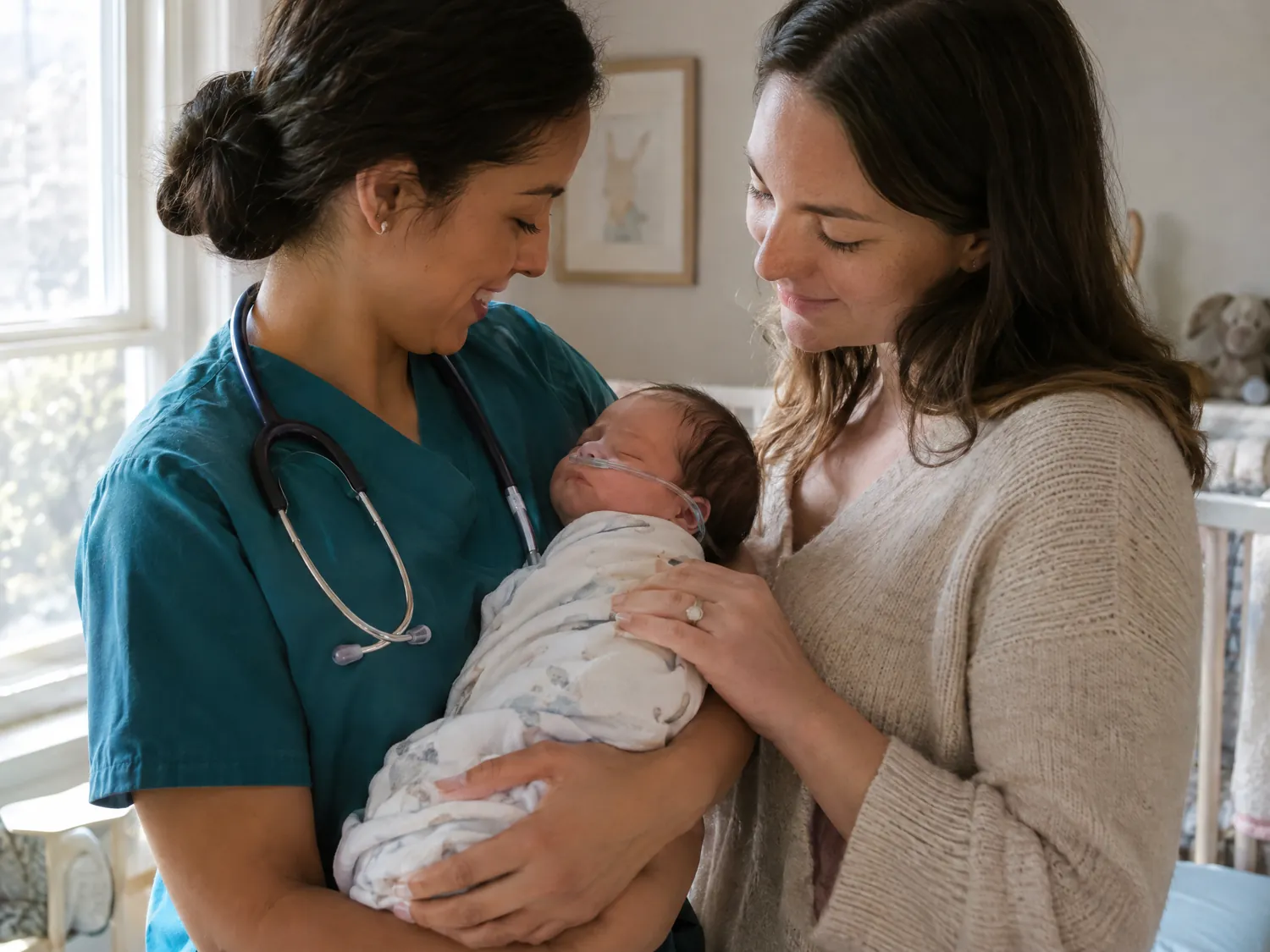
Enrolled GAPP Provider
College Park, Georgia
RN + LPN
Infant focused nursing
01 / Overview
Bringing Your Baby Home From the NICU
Leaving the NICU is a moment parents wait weeks or months for. It can also feel overwhelming. In the hospital, nurses and monitors were always close by. At home, the alarms, the medicines and the feeding schedule become yours.
Some babies go home with oxygen, a feeding tube, a pulse oximeter or apnea monitor, or a tracheostomy and ventilator. For these infants, a licensed pediatric nurse in the home can carry part of the load. The nurse follows the orders written by your baby’s doctors and helps you build confidence one shift at a time.
The Georgia Pediatric Program (GAPP) is a Georgia Medicaid program, administered by the Georgia Department of Community Health (DCH), that provides in-home skilled nursing and personal care support for medically fragile children ages 0-21.

02 / Discharge Planning
Plan for Home Before Discharge
The best time to talk about home nursing is while your baby is still in the NICU. Starting early gives everyone time to prepare.
01
Start the GAPP Conversation Early
Ask the NICU team about home nursing as soon as discharge comes up. You can call us while your baby is still in the hospital so intake can begin.
02
Work With the Case Manager
The hospital case manager or social worker coordinates equipment, supplies, follow up visits and referrals. Tell them you want home nursing and share our contact details.
03
Gather Physician Orders
Home nursing needs written orders from your baby’s doctor that describe the care needed. We help collect these orders and the medical records that support them.
04
Prior Authorization
All GAPP services require prior authorization, requested through an enrolled agency. We prepare and submit the packet, track it, and help with appeals if it is denied. The state makes the final decision.
03 / Infant Care
What Your Baby's Nurse Helps With
Every task follows the care plan from your baby’s doctor. Nurses report changes to you and the care team rather than changing treatment on their own.
01
Feeding Support
Bottle, breast or tube feeding support, including G-tube and NG tube care, pump setup and watching for spit up or feeding intolerance.
02
Oxygen and Monitor Checks
Checking oxygen flow and tubing, reading pulse oximeter numbers, responding to alarms and keeping equipment clean and working.
03
Growth Tracking
Recording weights, intake and diapers as ordered so the pediatrician and specialists can see how your baby is growing.
04
Medication
Giving medicines on schedule, measuring small infant doses carefully and keeping a clear log for every shift.
05
Parent Teaching
Showing you each skill step by step, then watching you practice until you feel ready to do it on your own.
06
Trach and Vent Care
For babies with a tracheostomy, suctioning, stoma care and ventilator checks as ordered by the respiratory team.
04 / First Weeks
The First Weeks at Home
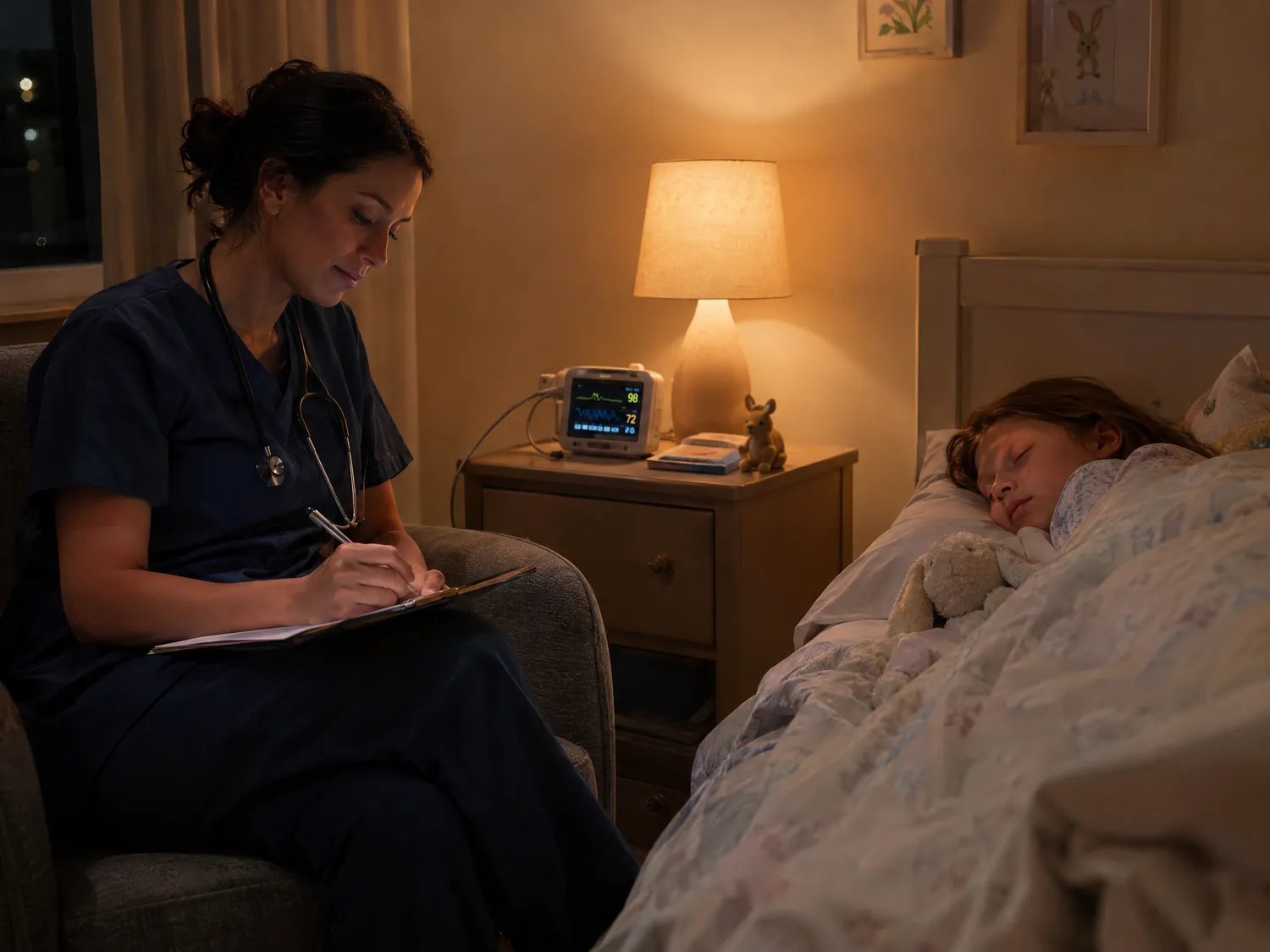
The first weeks bring many follow up appointments, new routines and very little sleep. A nurse on overnight shifts can watch your baby’s breathing and monitors while you rest. Daytime shifts can cover feedings, medicines and appointment preparation.
Your nurse keeps notes you can bring to the pediatrician, so questions about weight, feeding or alarms come with real details. If something seems different, the nurse helps you decide when to call the doctor.
You also help choose your nurse. If the match does not feel right, you can ask for a different nurse.
Many parents also worry about siblings, work and their own recovery after birth. Shift coverage gives you time to care for the rest of your family, return calls and simply hold your baby without watching the clock.
- Overnight and respite shifts so parents can sleep
- Help preparing questions for follow up visits
- A steady routine for feeds, medicines and equipment
When to Call 911
Call 911 right away if your baby has trouble breathing, turns blue or gray around the lips or face, or will not wake up or respond. Do not wait for a nurse or a call back. For questions that are not emergencies, talk to your child’s doctor.
05 / Coverage
How GAPP Can Help Pay for Home Nursing
Your baby must be Medicaid eligible, either directly or through the Katie Beckett (TEFRA) pathway, which looks at the child’s own income and resources rather than the parents’. Eligibility depends on medical necessity documented by your baby’s physician.
There is no out-of-pocket cost for approved hours when approved by Georgia Medicaid. Hours are set by the state based on documented need and are reviewed periodically, so you can ask for an update as your baby grows and needs change.
Timing varies. First call and intake usually happen in the first week, and paperwork and physician orders take roughly the next two weeks. The state’s review usually takes up to about 30 days after a complete packet, and most families start care about 30-60 days after the first call. That is another reason to start before discharge. We cannot promise a start date.
Sources And Official Information
- Georgia DCH: Georgia Pediatric Program (GAPP) overview
- Georgia DFCS Medicaid Policy Manual, section 2933: Georgia Pediatric Program
Last reviewed October 2026. This page is general information, not medical or legal advice. Talk to your child’s doctor about your baby’s care.
FAQ
Questions About NICU to Home Nursing
When should we call about home nursing?
Call while your baby is still in the NICU, ideally once discharge planning begins, so the timeline above can start running before your baby needs the nurse at home.
Can nursing start the day my baby comes home?
Sometimes it can, but approval timing is up to the state. Ask the NICU team whether your baby can stay until home support is ready, and plan with the case manager.
My baby has private insurance. Can we still apply?
Yes. Children with private insurance can still apply, and Medicaid can act as secondary coverage.
Does a nurse stay overnight?
Many NICU families ask for overnight coverage. How many hours your baby receives depends on what the state approves, and we work out the shift pattern with you.
Will the nurse teach us to do the care ourselves?
Yes. Parent teaching is a regular part of care. The goal is for you to feel capable and confident, while still having skilled help on the shifts the state approves.
What areas do you serve?
Our office is in College Park. We serve Fulton, Clayton, DeKalb and Fayette counties, and families statewide through GAPP. Contact us to confirm coverage for your address.
Can we switch agencies later?
Yes. Families choose their GAPP provider and may switch agencies if the fit is not right.
What if GAPP is denied?
We help with appeals and can review what documentation might be missing with you and your baby’s doctor.
Is home nursing a replacement for follow up visits?
No. Your baby still needs every pediatrician, specialist and therapy visit the NICU team scheduled. Home nursing supports that plan between appointments, and the nurse can help you get ready for each visit so nothing important is forgotten.
Take The First Step
Start Planning Before Discharge
Call 404-905-8332 or check eligibility online and we will help you prepare for your baby’s homecoming.