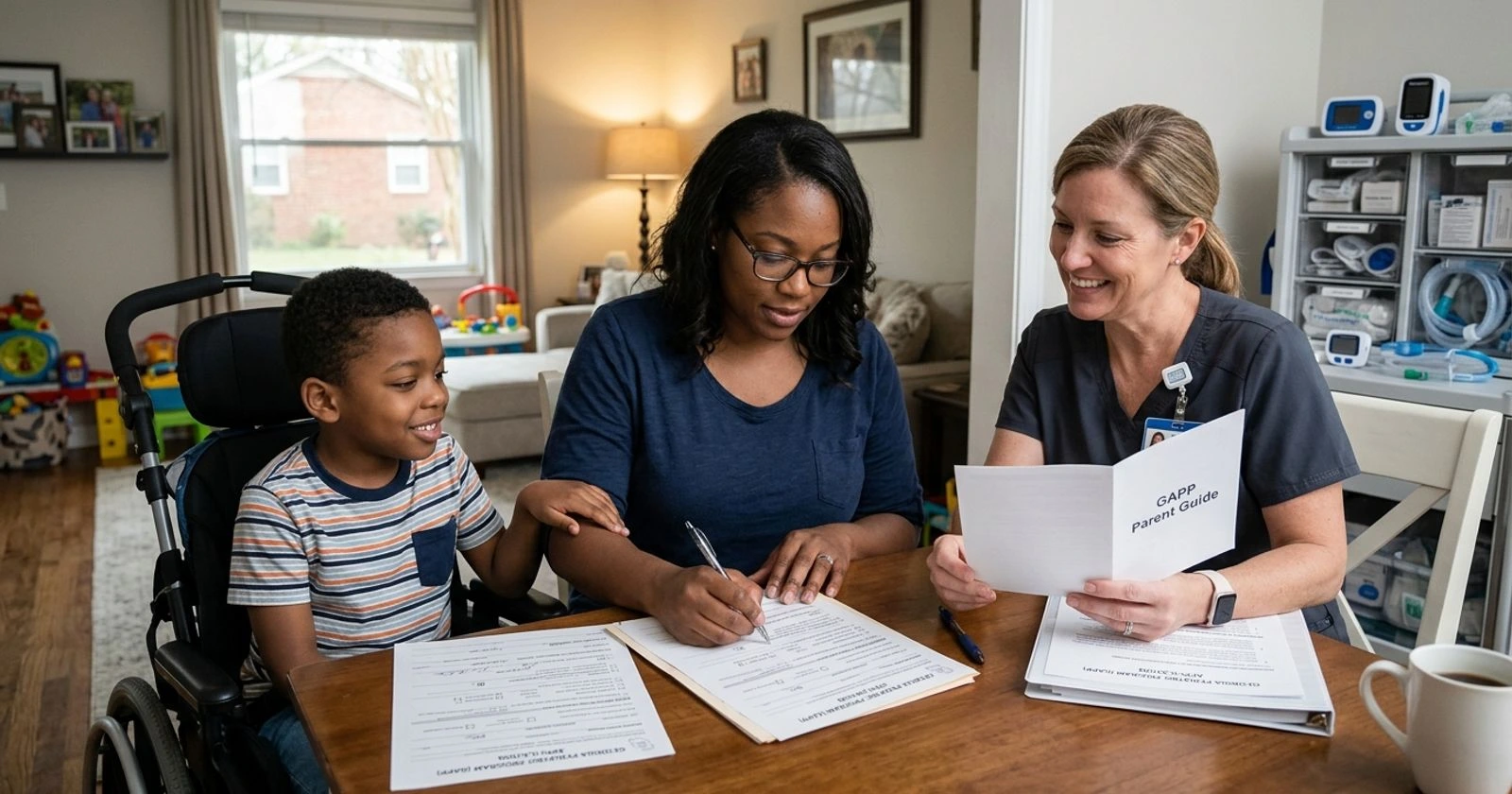
Learn exactly how to apply for GAPP Georgia the right way. This guide covers eligibility, the 5-stage process, and how to avoid costly mistakes that delay care.
Every week a family spends waiting on incorrect information about Georgia Medicaid programs is a week their medically fragile child goes without the skilled nursing care they need at home. Knowing exactly how to apply for GAPP Georgia, and doing it correctly the first time, is what separates families who get services in weeks from those who wait months.
Key Takeaways- GAPP (Georgia Pediatric Program) serves medically fragile children ages 0-21. It is NOT the same as NOW or COMP, which serve adults with intellectual and developmental disabilities.
- Your child must have active Georgia Medicaid enrollment before any GAPP steps can begin.
- Families apply through a DCH enrolled provider agency, not through a single state portal.
- The full process typically moves through five stages before services start.
- A denied application can be appealed, and reapplying with stronger documentation significantly improves outcomes.
Table of Contents
GAPP vs. NOW and COMP: Why This Distinction Matters Before You Apply
Search “how to apply for GAPP Georgia” on a state website right now, and the top result is almost certainly about the wrong program. The
georgia.gov page that ranks first covers the New Option Waiver (NOW) and the Comprehensive Support Waiver Program (COMP). Both are Medicaid waivers, but they serve adults with intellectual and developmental disabilities. They are not designed for children with complex medical needs.The Georgia Pediatric Program is a separate Medicaid program entirely. GAPP specifically serves medically fragile children and young adults from birth through age 21 who need skilled nursing or personal care support at home because of complex medical conditions. Starting your application using NOW or COMP guidance sends you to the wrong forms, the wrong contacts, and the wrong eligibility criteria. That mistake alone can cost a family months.
GAPP qualifying conditions include, but are not limited to:- Ventilator dependence
- Tracheostomy care needs
- Severe neurological disorders
- Congenital heart conditions requiring ongoing monitoring
- Severe epilepsy with significant functional limitations
- Cerebral palsy with substantial care needs
- Other diagnoses requiring nursing level oversight at home
The correct starting point for GAPP is the Georgia Department of Community Health (DCH) and its contracted GAPP provider network. The Georgia MMIS (Medicaid Management Information System) portal exists for provider enrollment, not family applications.Families access GAPP through a DCH enrolled provider agency, which coordinates the referral and level of care assessment on your behalf.If you are also weighing whether in home nursing is the right fit compared to other care settings, this breakdown of
pediatric daycare vs in home nursing in Georgia is worth reading before you proceed.
GAPP Eligibility Checklist: Does Your Child Qualify Before You Apply?
Before you contact a provider agency, run through these four core criteria. Meeting all four puts your child in a strong position to qualify.
- Age 0-21: Your child must fall within this range at the time of application.
- Active Georgia Medicaid enrollment: Applied but not yet enrolled does not count. Your child must have confirmed, active coverage. Children enrolled in Georgia’s PeachCare for Kids or SSI linked Medicaid are typically already positioned to qualify.
- Documented medical condition requiring nursing level care: The diagnosis must be on record and supported by physician documentation.
- Safe to receive care at home: The child’s condition must be stable enough that skilled care can be delivered in a home setting rather than a hospital or institution.
Understanding the “Level of Care” Threshold
Georgia DCH requires that your child’s medical needs meet or exceed what would otherwise require institutional or hospital level care. This is a specific clinical bar, not a general statement of medical complexity. Your child’s physician must document this in writing, including diagnosis codes (ICD-10), the current treatment plan, any equipment in use such as feeding tubes or ventilators, and specific functional limitations.You can run an informal eligibility screen before starting the formal process. Check your child’s Medicaid enrollment status through the Georgia Gateway portal at gateway.ga.gov. Gather your child’s ICD-10 diagnosis codes from their medical records. Then speak directly with the child’s primary care physician or specialist about whether the medical record supports a “medical necessity” determination at the nursing level of care.
Pro Tip: Ask the physician’s office specifically whether your child’s records include documentation of equipment dependence and functional limitations. These two elements are the most commonly missing pieces when GAPP applications are delayed.
Income based eligibility is tied to the child, not the household. A family with higher household income can still qualify if the child meets Medicaid criteria individually, particularly through SSI linked Medicaid or a Medicaid spend down arrangement. For a broader look at how Georgia families access
in home care for a disabled child through GAPP, that resource covers the financial eligibility side in more detail.
How to Apply for GAPP Georgia: The Complete Step by Step Process
Families do not submit a GAPP application through a single online portal. The process runs through five stages involving your child’s physician, a provider agency, and the Georgia Department of Community Health.
Step 1: Confirm Medicaid EnrollmentLog in to the Georgia Gateway portal (gateway.ga.gov) and verify your child has active Georgia Medicaid coverage. If enrollment has lapsed, resolve that first. Nothing else in this process moves forward without confirmed coverage.
Step 2: Get a Physician Referral and Medical DocumentationAsk your child’s physician to prepare a written order or attestation confirming medical necessity. This document needs to include:
- Current ICD-10 diagnosis codes
- Active treatment plan
- Equipment in use (ventilator, feeding tube, tracheostomy supplies, etc.)
- Specific functional limitations that require nursing level support
Gathering this documentation typically takes one to two weeks, depending on the practice’s workload. Start this step early.
Step 3: Contact a GAPP Enrolled Provider AgencyThis is the step most families miss. You do not mail an application to the state. You contact a DCH enrolled provider agency, which initiates the referral and coordinates the level of care assessment with DCH on your behalf. SLB
In Home Care offers free GAPP Application Assistance and can guide families through each step of this process, providing free skilled and unskilled nursing for medically fragile children through the GAPP Medicaid program.
Step 4: Level of Care Assessment and AuthorizationA clinical reviewer evaluates your child’s medical records and physician documentation to confirm GAPP eligibility. Once approved, the provider agency receives authorization from DCH to begin services. Understanding
what to expect from in home skilled nursing for your child can help you prepare for this stage and know what questions to ask.
Step 5: Provider Selection and Care Plan DevelopmentYou have the right to choose your GAPP enrolled provider agency. Assignment is not mandated by the state. The chosen agency then builds an individualized care plan based on your child’s specific needs, which may include Skilled Nursing Care, Unskilled Personal Care, or Post Surgery Care.
GAPP Approval Timelines, Common Denials, and How to Appeal
Realistic timelines vary by case, but here is what most families can expect at each stage:
- Medicaid verification: Immediate if already enrolled
- Physician documentation gathering: One to two weeks
- Level of care review by DCH: Typically two to four weeks
- Provider authorization before services start: Varies by case complexity
Most families move through the full process in four to eight weeks. Cases with documentation gaps or Medicaid enrollment issues take longer.
Why Applications Get Delayed or Denied
The most common reasons GAPP applications stall or receive a denial:
- Incomplete physician documentation (missing ICD-10 codes or functional limitation detail)
- Medicaid enrollment lapses between application and review
- Failure to meet the level of care threshold as documented
- Submission errors by the provider agency
- Missing equipment lists or treatment plan details
How to Appeal a Denial
A denial is not the end of the process. Families have the right to request a Fair Hearing through the Georgia Department of Community Health within the window specified on the denial notice. Read that notice carefully. The Fair Hearing request must be submitted in writing and should include the reason you believe the denial was incorrect.Supporting materials that strengthen an appeal include updated medical records reflecting current condition severity, specialist attestation letters beyond the primary care physician’s order, and documentation of any recent hospitalizations or clinical changes. Each addition gives the reviewer a clearer picture of your child’s actual medical need.If you are reapplying after a denial, work with a provider agency that offers dedicated GAPP consulting support. Repeat documentation errors are the most preventable reason families face a second denial.Families who want step by step guidance on the Georgia Pediatric Program enrollment process can check eligibility and get application support at
slbinhomecare.org/am-i-qualified.
Key Takeaways {#key-takeaways-summary}
- GAPP is a Georgia Medicaid program specifically for medically fragile children ages 0-21. It is not the same as NOW or COMP, which serve adults with intellectual and developmental disabilities.
- Eligibility requires active Georgia Medicaid, a qualifying medical condition, physician documentation of medical necessity, and a demonstrated need for skilled or unskilled nursing care at home.
- The application process involves your child’s physician, a GAPP enrolled provider agency, and the Georgia Department of Community Health. Families do not apply through a single online state portal.
- Approval timelines vary by case complexity, but expect multiple stages including eligibility review, level of care assessment, and provider authorization before services begin.
- If your application is denied, you have the right to appeal. Reapplying with stronger medical documentation and specialist support letters significantly improves outcomes.
Frequently Asked Questions About Applying for GAPP in Georgia
What is the difference between GAPP and private duty nursing, and when do I choose each?
GAPP is a Georgia Medicaid program that funds
in home nursing for medically fragile children at no out of pocket cost. Private duty nursing is a separate Medicaid benefit that may overlap in some situations but is billed and authorized differently. A GAPP enrolled provider agency can review your child’s situation and clarify which benefit applies.
How long does it actually take to get approved for GAPP after submitting an application?
Most families move through the full process in four to eight weeks, though cases with complex documentation or Medicaid enrollment issues can take longer. Working with an experienced provider agency that handles documentation thoroughly reduces delays significantly.
Can I request a specific GAPP provider agency, or is assignment mandated?
Families have the right to choose their GAPP enrolled provider agency. The state does not mandate assignment. You can request a specific agency when you begin the referral process.
What happens if my GAPP application is denied?
You can request a Fair Hearing through Georgia DCH to contest the denial within the timeframe listed on your denial notice. Reapplying with updated physician documentation, specialist attestation letters, and support from an experienced provider agency also improves approval odds on a second application.
What medical conditions or diagnoses qualify for GAPP coverage?
GAPP covers a wide range of medically complex conditions including ventilator dependence, tracheostomy care, severe epilepsy, congenital heart disease, cerebral palsy with significant functional limitations, and other diagnoses that require nursing level care at home. The key factor is whether the child’s documented medical needs meet Georgia DCH’s level of care threshold, not the diagnosis name alone.
Related Guides