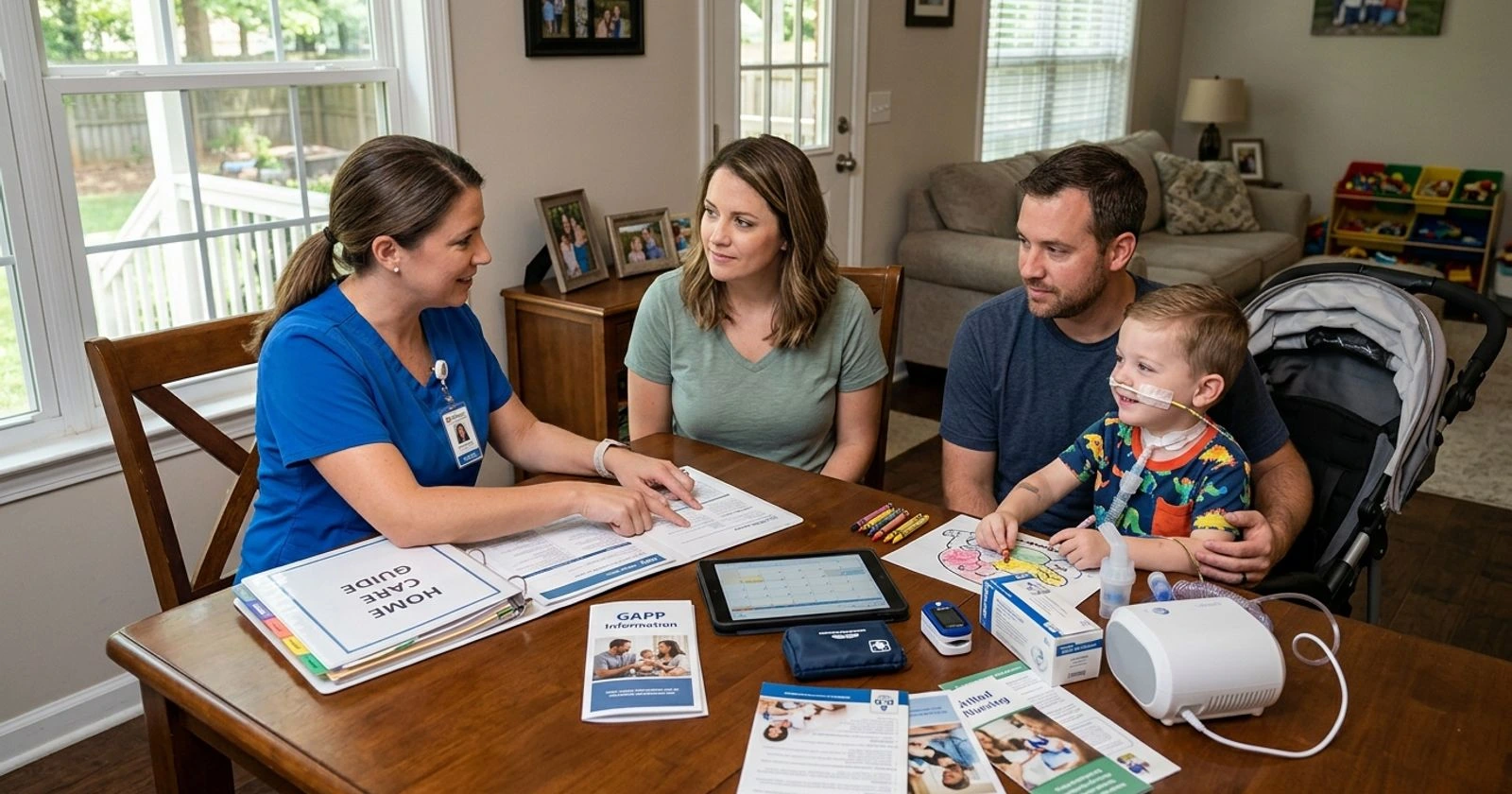
A hospital discharge packet is not a comprehensive home care plan. In 2026, assuming standard hospital paperwork will automatically trigger state-funded nursing support often delays critical clinical interventions by months. Understanding exactly How Families Can Prepare for Long-Term Home Nursing Care dictates whether a medically fragile child receives immediate clinical support or faces endless bureaucratic stalling.
To bridge this gap, SLB In-Home Care provides free skilled and unskilled nursing services for medically fragile children in Georgia through the GAPP Medicaid program. Transitioning a child from a hospital environment to a residential setting requires precise operational planning rather than just good intentions.
Relying on scattered documents simply will not work for incoming clinical teams. Parents must take an active, highly structured role in pediatric home nursing setup to avoid approval denials.
It requires a systematic approach to infrastructure, communication, and documentation. Without these elements, even the most experienced nurses struggle to deliver optimal care. Proper family preparation transforms a chaotic transition into a highly controlled medical environment.
Key Takeaways
- Understand the specific documentation and approval timelines required for GAPP support in 2026.
- Learn how to optimize your home’s electrical layout, infection control zones, and emergency egress.
- Discover a systematic approach to digitizing and organizing your child’s medical history.
- Implement a structured family-nurse communication framework for seamless daily handoffs.
Table of Contents
- Navigating GAPP Approvals and Required Documentation
- Pre-Arrival Home Readiness: Setting Up for Pediatric Skilled Nursing
- Creating a Bulletproof Medical Record and Medication System
- Establishing a Family-Nurse Communication Framework
- How Families Can Prepare for Long-Term Home Nursing Care
Navigating GAPP Approvals and Required Documentation
Securing Medicaid pre-authorization for pediatric skilled nursing in Georgia requires following a strict administrative sequence. The 2026 Georgia Pediatric Program enrollment roadmap demands specific clinical evidence before any nursing agency can initiate an intake visit. Parents must first gather a comprehensive physician’s letter of medical necessity that explicitly outlines the required frequency of care. Recent clinical visit summaries and specialized care orders must accompany this letter to satisfy state reviewers.
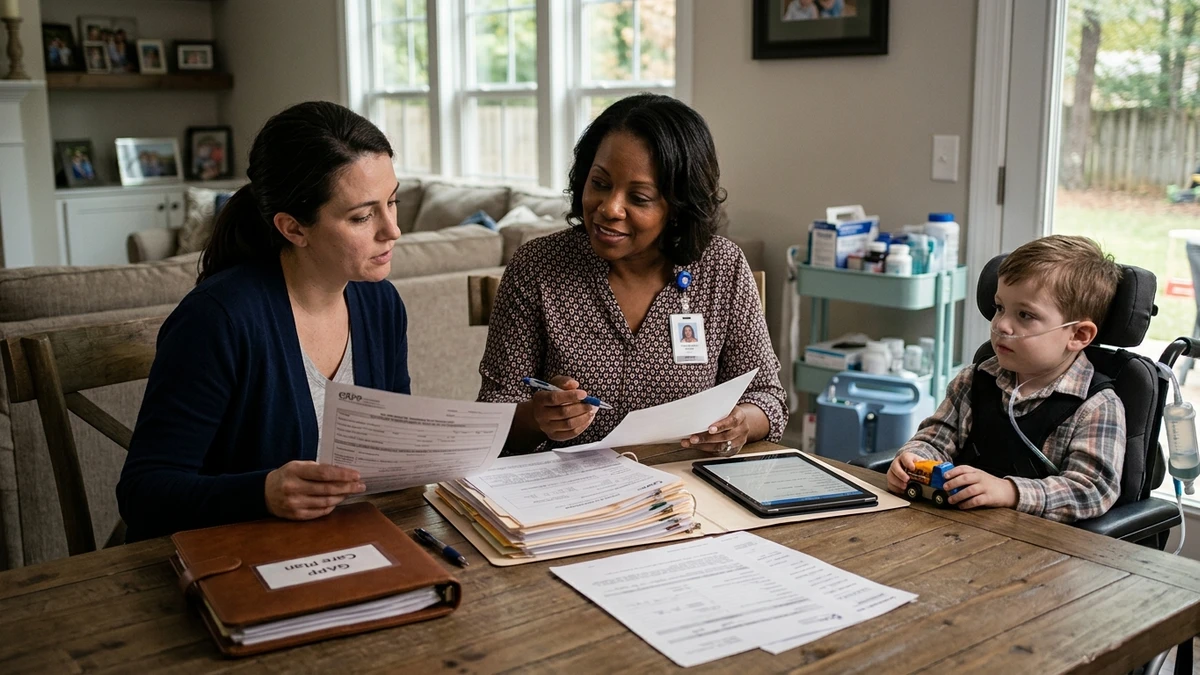
Approval timelines for GAPP applications typically span several weeks depending on the completeness of the submitted medical records. Setting realistic expectations for this waiting period helps families manage their long-term care planning strategies while anticipating the official start of in-home services.
Clinical intake data consistently shows that families who proactively organize their paperwork experience significantly fewer state rejections. Missing a single signature on a specialized care order can reset the entire Medicaid services authorization clock. To prevent these delays, parents should consult local health department resources to understand exact regional requirements.
Gathering immunization histories, baseline vital records, and hospital discharge summaries into one cohesive file demonstrates medical necessity clearly to reviewers. Dedicated administrative support can review physician orders before submission to ensure compliance with 2026 approval standards.
This targeted oversight prevents common application errors and accelerates the timeline for bringing qualified nurses into the home. Many parents find themselves weighing pediatric daycare vs in-home nursing during this waiting period. However, securing dedicated one-on-one clinical support at home ultimately provides a more controlled environment for immunocompromised children.
Pre-Arrival Home Readiness: Setting Up for Pediatric Skilled Nursing
Transforming a standard residential bedroom into a highly functional clinical space requires careful attention to infrastructure and safety. A comprehensive pre-arrival home assessment must prioritize electrical load management for critical medical equipment. Ventilators, feeding pumps, and continuous monitors draw significant power. Managing this electrical load is similar to wiring a home for heavy industrial appliances, meaning parents must verify outlet capacity and install surge protectors before nurses arrive. Establishing dedicated infection control zones is another critical step for protecting pediatric patients.
Families should designate a specific hygiene station near the child’s room equipped with sanitizers, gloves, and protective gear. Incoming nurses need immediate access to these supplies without having to search through family bathrooms or hall closets. Creating a physical boundary between general family living areas and the clinical space minimizes the risk of cross-contamination. Safe and accessible medication storage also demands immediate attention during the family preparation phase. Controlled substances and daily medications must remain highly organized but securely locked away from other children or unauthorized visitors.
You should physically test the turning radius of emergency egress pathways prior to the first nursing shift to prevent critical delays during sudden medical escalations. Clear all pathways of toys, rugs, or furniture that could impede the rapid movement of a wheelchair or medical stretcher. The physical layout of the child’s room must comfortably accommodate both the patient and the nursing staff during long shifts. Nurses need adequate lighting, a dedicated charting station, and unhindered access to both sides of the child’s bed to perform vital signs monitoring and wound care safely.
Pro Tip: When evaluating free in-home care disabled child georgia options, always ask the agency for a standardized room preparation checklist to ensure your home meets state clinical safety standards before the first shift.
Creating a Bulletproof Medical Record and Medication System
Transitioning from scattered hospital discharge papers to a centralized medical record system prevents critical clinical oversights. Parents should digitize all relevant documents using PDF or form-fillable templates via patient portals to create a single source of truth. This digital repository allows incoming nurses to instantly review past medical history, known allergies, and baseline vital signs. Having an established benchmark for the child’s standard health status helps new caregivers immediately identify abnormal clinical changes.
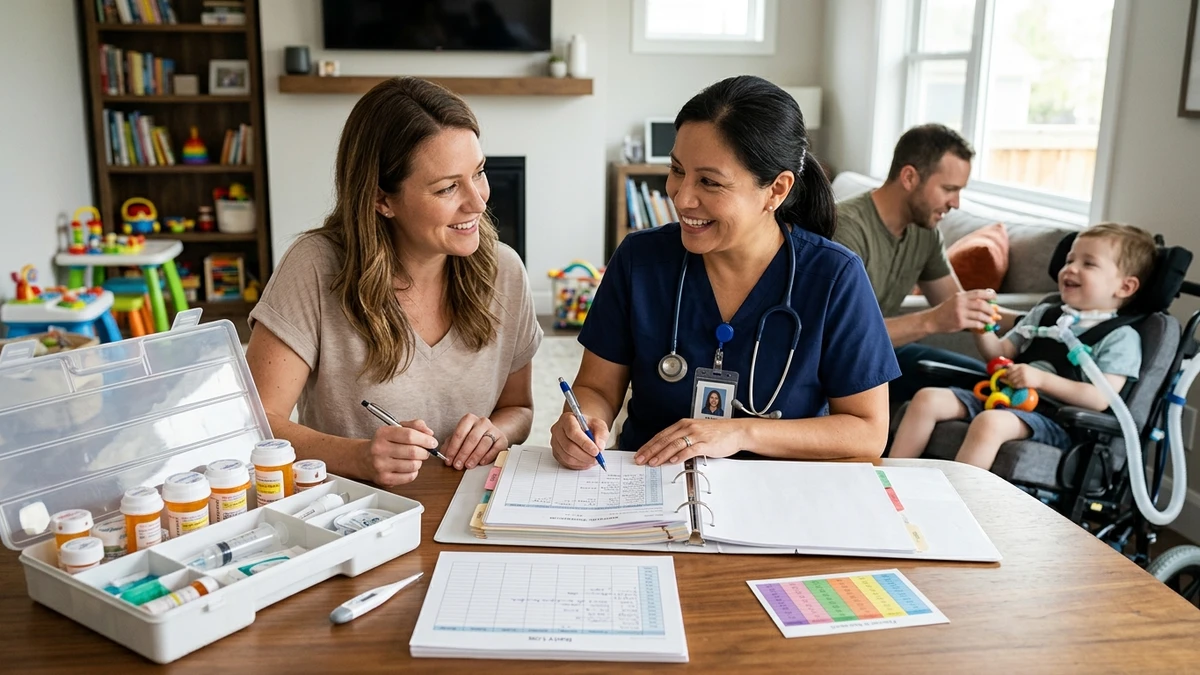
Building a structured medication list is the most vital component of this organizational effort. This list must include exact dosages, administration routes, frequency schedules, and known contraindications for every prescribed drug. Presenting this organized system to an incoming nurse immediately establishes a tone of professionalism and collaboration.
I have found that relying solely on digital records can backfire if the home experiences a power outage or internet failure. To create redundancy, families should assemble a physical quick-reference binder that stays permanently in the child’s room.
This binder must contain printed insurance verification, emergency contacts, and the most recent physician orders. Updating this physical copy every time a medication dosage changes ensures the nursing team always operates from current instructions. This level of meticulous chronic care management directly impacts the quality of daily clinical interventions.
Pediatric nursing involves rapidly changing developmental milestones that require constant documentation updates. Regularly updating clinical visit summaries ensures the nursing staff understands how the child’s developmental progress impacts their daily care requirements.
Establishing a Family-Nurse Communication Framework
Clear communication protocols dictate the success or failure of any pediatric home nursing arrangement. Parents must implement standardized shift handoff forms that capture daily routines, feeding schedules, and behavioral observations. Tracking subtle clinical changes between nursing shifts prevents minor issues from escalating into medical emergencies.
An effective handoff template requires departing nurses to document specific metrics rather than vague summaries of the day. This exactness guarantees that the incoming nurse knows precisely when the last medication was administered and how the child tolerated their most recent feeding.
Families can use secure telehealth platforms for weekly coordination meetings with the broader clinical team to review these handoff notes. Creating this structured feedback loop keeps everyone aligned on the child’s evolving care plan.
Setting up emergency escalation protocols is equally necessary before the first nursing shift begins. The family-nurse communication agreement should clearly define the exact clinical triggers that require contacting the parents, the primary care physician, or emergency services.
Drafting a written household policy that outlines specific rules regarding privacy, noise levels during naps, and the child’s unique sensory needs is also highly recommended. Presenting this document during the initial intake meeting prevents daily misunderstandings and establishes a respectful boundary between your family life and the clinical workspace.
High-quality pediatric home care relies on this mutual respect and clear expectation setting.
How Families Can Prepare for Long-Term Home Nursing Care
Understanding How Families Can Prepare for Long-Term Home Nursing Care ultimately comes down to building a partnership with the right clinical agency. Because organizing these medical requirements can feel overwhelming, securing expert guidance early makes a massive difference in your preparation timeline.
SLB In-Home Care ensures families have the exact clinical support they need without the administrative burden. Our team helps you coordinate the necessary GAPP support documentation to get your home ready for incoming nurses. To explore your options and take the next step in establishing a safe home care environment, book a free assessment today.
FAQ
What documents do I need to prepare for a pediatric home nursing care intake visit?
You will need a physician’s letter of medical necessity, recent clinical visit summaries, and specialized care orders detailing the required nursing frequency. It is also highly recommended to compile a digitized past medical history, an updated immunization record, and an exact medication list.
How long does it take to get approved for Medicaid-covered home nursing care in Georgia?
Approval timelines for the Georgia Pediatric Program typically span several weeks from the date of submission. The exact duration depends heavily on the completeness of your submitted medical records and the speed at which your physician provides the required signatures.
What should I do to my home before skilled nurses start coming?
You should assess your home’s electrical capacity to ensure it can safely handle ventilators or feeding pumps without overloading circuits. Parents must also establish an infection control hygiene station, secure all medication storage areas, and clear emergency egress pathways.
How do I organize my child’s medications and medical history for the nursing team?
Create a centralized digital repository using PDF templates that details exact dosages, administration routes, and known allergies. You should also maintain a physical quick-reference binder in the child’s room containing printed physician orders, insurance verification, and emergency contact protocols.