See what a real day of pediatric tracheostomy care at home involves in Georgia, and how GAPP funds skilled nursing hours at no cost to eligible families.
A missed suction window can turn into an ER visit in under ten minutes. For a family managing tracheostomy care at home, that single unplanned trip means a night in observation, a lost shift of work, and a fear that doesn’t fade by morning.Georgia parents already living this reality don’t need another supply checklist. They need a real hour-by-hour picture of what trach care actually involves, and which parts of it Medicaid will pay a trained nurse to handle instead of one exhausted parent.
Key takeaways- A safe home trach routine runs on scheduled suctioning, stoma checks, humidification, and rehearsed emergency response, not just a supply closet.
- The November 2025 ATS pediatric tracheostomy guideline pushes hospitals toward documented caregiver competency, not a rushed discharge checklist.
- GAPP can fund skilled nursing hours for trach care, suctioning, and related feeding support at zero out-of-pocket cost for eligible children ages 0-21.
- Families who staff this care with trained nurses instead of relying solely on parents report fewer ER trips and far less burnout.
What a Real Day With a Home Trach Routine Looks Like
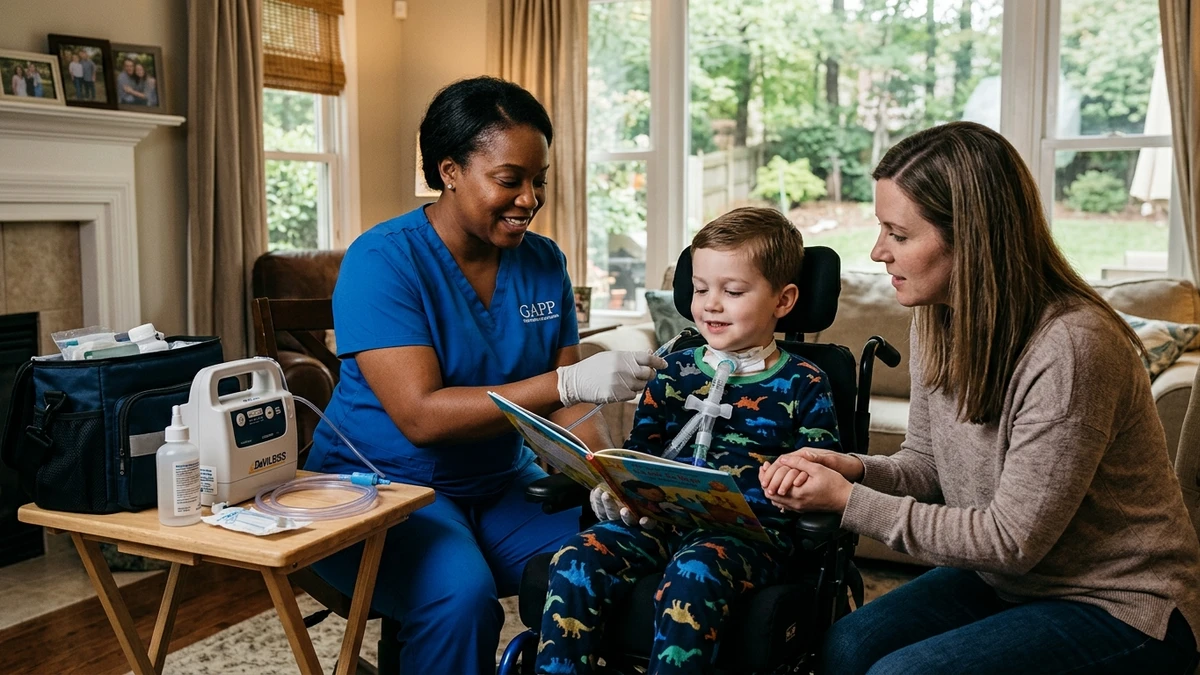
A trach-dependent child’s day doesn’t run on a clock the way a typical toddler’s does. It runs on airway status. Morning starts with a stoma inspection, checking for redness, drainage, or skin breakdown around the tube site before anything else happens.From there, suctioning happens on a schedule, but the interval isn’t universal. A child with a smaller trach tube and thick secretions from a respiratory condition may need suction every one to two hours. Another child with a larger airway and a different diagnosis may go four hours between passes. This is exactly why the generic “suction every X hours” advice on non-Georgia guides misses the point.
A typical 24-hour rhythm includes:- Morning stoma and skin check, plus a full trach tie change
- Suctioning at intervals set by the child’s pulmonologist, not a default number
- Humidification checks throughout the day to keep secretions from thickening
- Scheduled tube changes, usually weekly, done by a trained caregiver or nurse
- Overnight monitoring for oxygen saturation drops or tube displacement
Feeding, speech therapy, and mobility all bend around airway care, not the other way around. A speech session pauses for suctioning. Physical therapy waits until the trach tie is secure. A trained skilled nurse changes this dynamic entirely. With a nurse present for scheduled shifts, a parent can sleep through the night, hold down a job, or simply care for other kids without splitting attention across two crises at once.
What the New ATS Guideline Means for Georgia Parents
The American Thoracic Society published an updated pediatric tracheostomy guideline in November 2025, shifting the standard away from a one-time discharge checklist. Hospitals are now expected to document actual caregiver competency, not just confirm a caregiver watched a demonstration once. That’s a meaningful difference for Georgia families leaving Children’s Healthcare of Atlanta or another pediatric hospital with a new trach.
Why Competency Documentation Matters at Home
The guideline also pushes for earlier and more structured decannulation readiness assessments, according to reporting from Children’s Hospital Colorado on the update. Ongoing home monitoring isn’t just about avoiding emergencies anymore. It’s part of tracking whether a child is progressing toward removing the tube altogether.Georgia hospitals are now expected to teach families skills that hold up under real home conditions, not just inside a hospital room. Most pages on tracheostomy care at home that Georgia families find online still describe GAPP in generic terms. Few connect the program’s nursing hours to this updated clinical standard of documented, ongoing competency.
Tracheostomy Care at Home Pediatric Georgia Families Can Actually Fund
Here’s where the math gets real. Trach suctioning, stoma assessment, tube changes, and monitoring for airway distress all qualify as skilled nursing tasks under GAPP. Bathing, dressing, and general supervision fall under unskilled personal care instead.GAPP nursing hours get calculated based on medical necessity, which means documentation matters enormously. A child with a high-risk airway, frequent secretions, or a history of tube displacement can qualify for overnight monitoring hours, not just daytime coverage.
The initial GAPP application is where most families lose hours they actually qualify for. Documenting suction frequency, tube size changes, and past airway emergencies in specific, dated detail makes a stronger case than a general summary of “needs a trach.”
SLB In-Home Care’s GAPP Application Assistance exists for exactly this step, helping families document trach care needs accurately the first time instead of appealing a denial months later. Because this runs through Georgia Medicaid rather than private insurance, eligible children pay nothing out-of-pocket for the nursing hours they’re approved for.
Why Hiring a National Home Health Chain Isn’t Always the Fit
Large multi-state home health providers often staff pediatric trach cases with rotating or per-diem nurses. That model works fine for short-term adult care. It works less well for a child whose airway needs a nurse who already knows the difference between her normal secretion pattern and the one that means trouble.
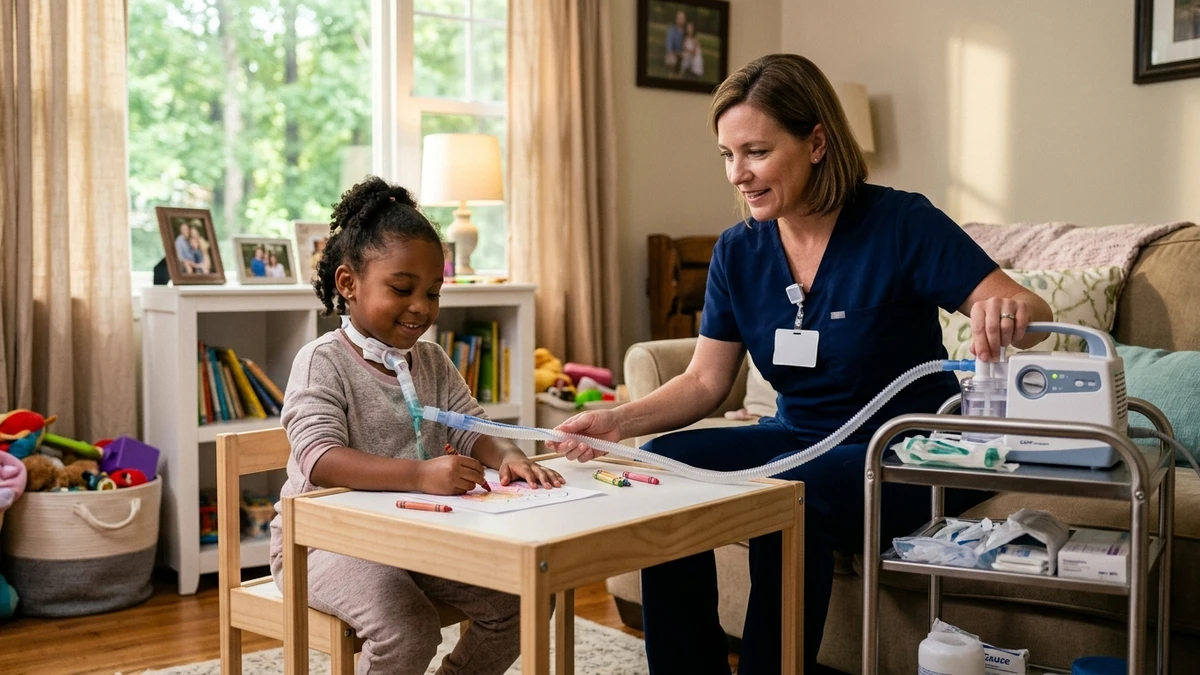
A nurse who spends months, not single shifts, with one child learns things a chart can’t fully capture:
- The exact trach size and how it sits in this child’s specific airway
- What “normal” agitation looks like versus early signs of respiratory distress
- Which emergency triggers this child has shown before, and how fast they escalate
Families should ask any provider directly about nurse-to-patient consistency and how many hours of trach-specific training each nurse completes. Staffing standards vary by provider, so it’s worth getting those numbers in writing before signing on.SLB In-Home Care builds its staffing around continuity instead of rotation. Its Georgia-based teams offer free skilled and unskilled nursing for medically fragile children through the GAPP Medicaid program, and they stay with a case over time rather than rotating through it. That continuity is the difference between a nurse who reacts to an emergency and one who catches it before it becomes one.
The Real Cost of Waiting to Set This Up
Every week a family delays applying for GAPP nursing hours is a week spent running airway care solo. Post-Surgery Care needs after a trach placement or revision often require more intensive monitoring in the first 30 days, exactly when families are least equipped to absorb overnight shifts alone. Consulting support can also help families figure out whether their child’s current routine matches what GAPP would actually fund.Trach care at home shouldn’t rest on one parent’s stamina, and it doesn’t have to. If your child is medically fragile and living with a trach, feeding tube, or another condition covered under GAPP, it’s worth finding out what nursing hours you already qualify for.
See If Your Child Qualifies and get a clear answer on what free skilled nursing support looks like for your family.
Frequently Asked Questions
Does GAPP cover overnight nursing for a child with a tracheostomy?
Yes, when medical necessity supports it. Children with high-risk airways, frequent secretions, or a history of tube displacement can qualify for overnight monitoring hours under GAPP, not just daytime nursing coverage.
How many hours of skilled nursing can a trach-dependent child qualify for under GAPP?
Hours are calculated individually based on documented medical necessity, so there’s no flat number that applies to every child. Strong documentation of suction frequency, tube changes, and past emergencies during the application process directly affects the hours approved.
What trach supplies does Georgia Medicaid cover versus what parents need to buy separately?
GAPP nursing covers the skilled tasks like suctioning, stoma care, and tube changes performed by a trained nurse. Specific supply coverage varies by case, which is why working with GAPP Application Assistance during setup helps clarify what’s included before assuming a cost falls on the family.
Can a family request a specific nurse or care team for consistency with a medically fragile child?
Families can and should ask providers directly about nurse-to-patient consistency policies. Providers that prioritize continuity, rather than rotating per-diem staff, typically keep the same nurse or small team assigned to one child over months.
Related Guides