Within the next few years, home setup for medically fragile children in Georgia will be judged less by how much equipment a family owns and more by how well the space works for a nurse on a twelve-hour shift.
Electronic Visit Verification is already being phased into GAPP home services, so every shift will be logged, and a disorganized home will show up in the care record. Parents who build the care space around the nurse, not just the child, will get safer shifts and fewer scrambles.
Setting up home for a medically fragile child comes down to three things done in order: confirm equipment and power before discharge, build one organized care station, and write down what to do when something fails. Start the GAPP application at the same time, so nursing is in place when the equipment arrives.
Table of Contents
- Start With the Discharge Planning Meeting
- What Does a Safe Care Room Need?
- Setting Up Home for a Medically Fragile Child
- Plan for Power Loss and Emergencies
- Frequently Asked Questions
Start With the Discharge Planning Meeting
Home setup begins in the hospital, not at your front door. Stop treating the discharge meeting as a formality. It is your one chance to get commitments in writing.
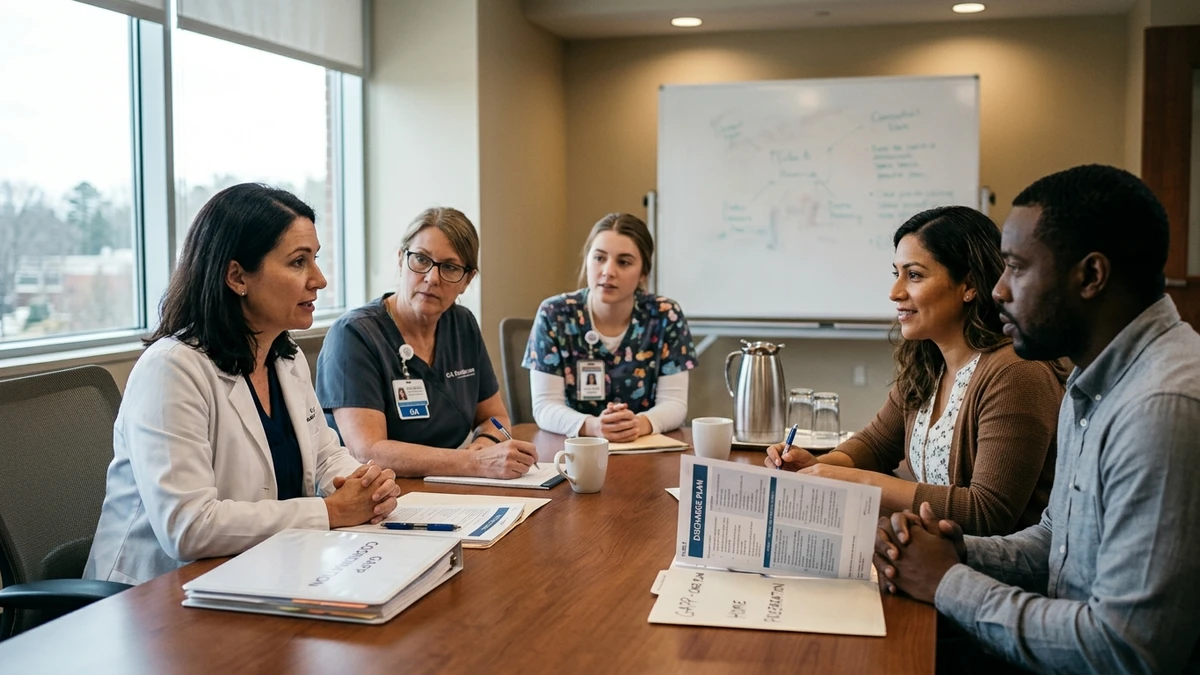
Ask the discharge team for three documents:
- A written equipment list covering oxygen, suction, pulse oximeter, feeding pump, and ventilator if your child uses one.
- A supply-delivery timeline with a named contact at each durable medical equipment (DME) vendor.
- A backup plan if a delivery slips past discharge day.
The sequence matters. Equipment should arrive, get tested, and be demonstrated by the vendor's respiratory therapist before your child comes home. Do not accept "it will be delivered that afternoon" as a plan. A child arriving before the suction machine does is the most common and most avoidable setup failure.
Two phone calls belong on the same week's to-do list. First, call your electric utility and register as a medical-necessity customer. Georgia Power and local electric membership cooperatives keep priority-restoration lists, but you have to ask to be on them. Second, call your local fire department and 911 center so the address is flagged for a home with medical equipment.
Georgia families with Medicaid can run this planning alongside a GAPP application, so nursing coverage starts when the equipment does. Our walkthrough on how to apply for GAPP covers the steps.
What Does a Safe Care Room Need?
A safe care room lets two adults work around the child without moving furniture. Aim for a bed height that suits the caregiver's back, clear access on both sides of the bed, and enough floor space to turn a wheelchair or reposition your child with two people.
Power comes first. Put medical equipment on a dedicated outlet circuit where you can, and use grounded, surge-protected power strips. Never daisy-chain strips. Label each cord so a substitute nurse can trace it at 3 a.m.
Build the bedside station
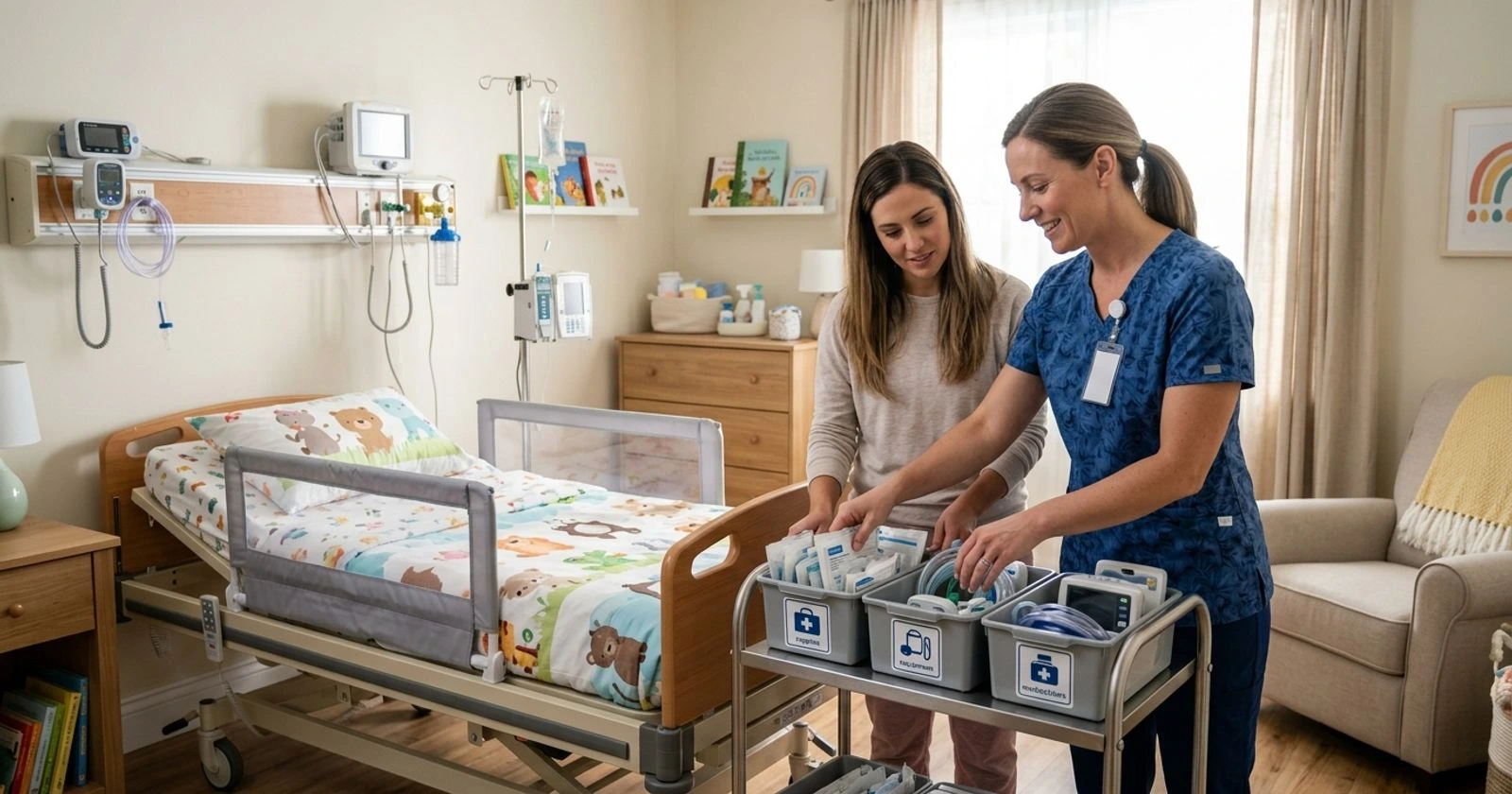
Think of the bedside station like a chef's mise en place. Everything a nurse might need sits within arm's reach, so no one leaves the child's side to hunt for a catheter:
- Suction machine, with catheters and saline
- Spare trach tubes and ties, plus an ambu bag
- Pulse oximeter with spare probes
- Supply bins labeled by task: airway, feeding, medications
- A hand-washing sink or sanitizer within a few steps
If your child has a tracheostomy, our post on tracheostomy care at home explains what belongs in that kit.
Control air and infection risks
Clean humidifiers on the schedule the manufacturer and your care team set, and change filters on time. Keep pets and smokers out of the care room. Separate clean supplies from dirty ones physically, with clean items on one shelf and used items bagged near the exit. This flow cuts infection risk, which drives many readmissions.
Add a documentation corner
Mount a clipboard or binder near the bed with the medication list, emergency care plan, physician contacts, and daily care log. Nurses chart from this spot. A well-organized corner makes shift handoffs faster and safer.
Setting Up Home for a Medically Fragile Child
Most guides stop at equipment. The gap is the nurse. Over a long shift, a nurse needs a clean place for personal belongings, access to hand-washing, a supportive chair for overnight hours, and a clear surface for the care log. Skip these and you will notice it by week two, when tired staff make avoidable errors.
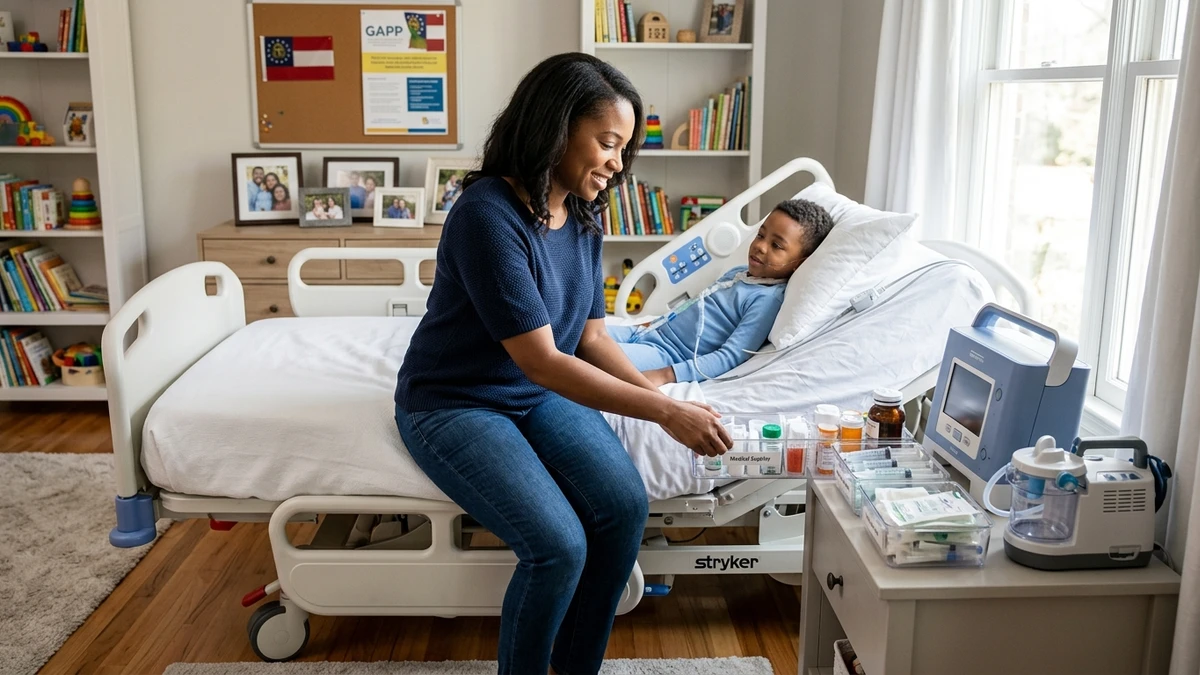
Set up the home for two kinds of care. Skilled nursing covers ventilators, trach care, G-tube feeding, and seizure monitoring. Unskilled personal care covers bathing, positioning, and daily routines. Under GAPP both can be covered, so stock and arrange the space for each. Skilled supplies belong in the care room.
Bathing and positioning supplies belong near the bathroom or changing area. For a clear breakdown, see our post on skilled versus non-skilled care.
SLB In-Home Care provides skilled and unskilled nursing, at no out-of-pocket cost once approved by Georgia Medicaid, for medically fragile children through the GAPP Medicaid program, and our consulting support can walk through the home with you before the first shift. A pre-shift walkthrough catches problems like a missing outlet or a blocked suction line before a nurse has to flag them mid-shift.
Pro Tip: Schedule a walkthrough with your nursing team in week one. Nurses will flag missing supplies, suggest layout changes, and train family caregivers. Treat their first-week notes as a punch list, not criticism.
Expect Electronic Visit Verification to shape routines. Georgia's Department of Community Health is applying EVV to GAPP services, with claims for dates of service on or after September 14, 2026 required to pass through it. In practice, nurses will log shift start and end, so choose a consistent spot for that check-in. Our guide to the first month of GAPP nursing shows what that routine looks like in practice.
Plan for Power Loss and Emergencies
Ask one question: if the power fails at 2 a.m., what happens in the first ten minutes? Write the answer down before you need it. Families who rehearse this once tend to stay calm the one time it matters, much like a fire drill.
Know your battery and backup numbers
Find the battery runtime for every device: ventilator, oxygen concentrator, feeding pump, suction. Keep backup oxygen cylinders on hand. If you add a generator or portable power station, size it to the combined wattage of your equipment. Then test the whole setup monthly, not once.
Post a one-page emergency sheet
Place copies by the front door and in the care room. Include:
- Diagnosis and current medications
- Equipment list
- Physician and DME vendor phone numbers
- Preferred hospital
First responders and substitute nurses should be able to act within minutes of reading it.
Prepare a go-bag for storm evacuations
Georgia families deal with hurricane-season evacuations and severe storms. Pack a week of supplies, copies of medical records and your GAPP authorization letter, spare chargers, and the address of an alternate location with reliable power. Confirm that location before storm season, not during it.
Check exits and alarms
Make sure wheelchairs and ventilator carts clear every doorway on your exit route. Fix thresholds or add ramps where needed. Test smoke and carbon monoxide detectors monthly, and light the route for nighttime use.
Frequently Asked Questions
Who pays for hospital beds and suction machines, and who do we call when something breaks?
For children with active Medicaid, DME is generally arranged through the hospital discharge team and the vendors they name, with a physician order behind it. Call the DME vendor first for repairs, and keep their after-hours number on your emergency sheet.
Can the home be modified, and does GAPP help?
Ramps and bathroom changes are usually possible, but GAPP funds nursing and personal care, not construction. Ask your care team and Medicaid case contacts what other programs may cover, and plan the modification before discharge if you can.
How soon should we start the GAPP application relative to discharge?
Start as early as possible, ideally during the discharge planning meeting. GAPP requires active Medicaid, physician documentation, and a level-of-care review, so waiting until your child is home can leave a gap in nursing hours.
Do we need a separate room for the child?
No. A shared bedroom or smaller home can work if you can fit a clear bedside station, a dedicated power setup, and room for two adults to move. A nurse can help you adapt the layout during the week-one walkthrough.
What if our home is not ready on the discharge date?
Tell the hospital team right away and ask about a short delay. A safe discharge is better than a fast one. Then See If Your Child Qualifies for free GAPP nursing so skilled help is ready when your child comes home.