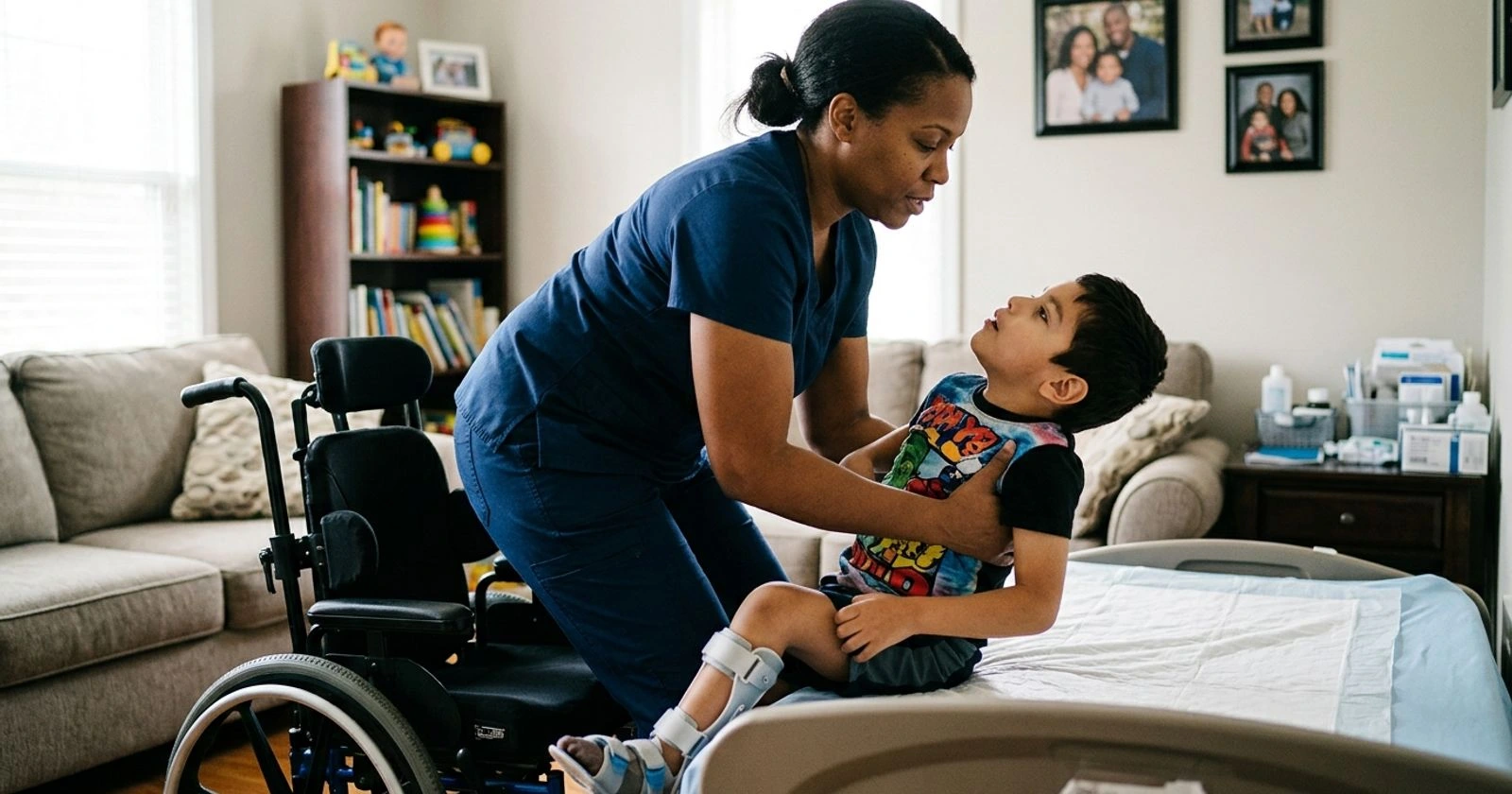
Safe lifting techniques for a disabled child start with a decision, not a motion. Learn when to lift, when to use equipment, and how GAPP in-home nursing can share the load.
A parent-focused article in the Family Achievement Foundation’s caregiver ergonomics guidance advises involving the child in the transfer whenever possible, and nursing education teaches the matching rule: check weight-bearing ability, balance, and pain before any lift. Most families skip that check and go straight to the lift. That is why safe lifting techniques for a disabled child start with a decision, not a motion.
Table of Contents
Decide Whether to Lift at All
Nurses are taught to assess a patient before every transfer. Parents can use the same logic with three questions:
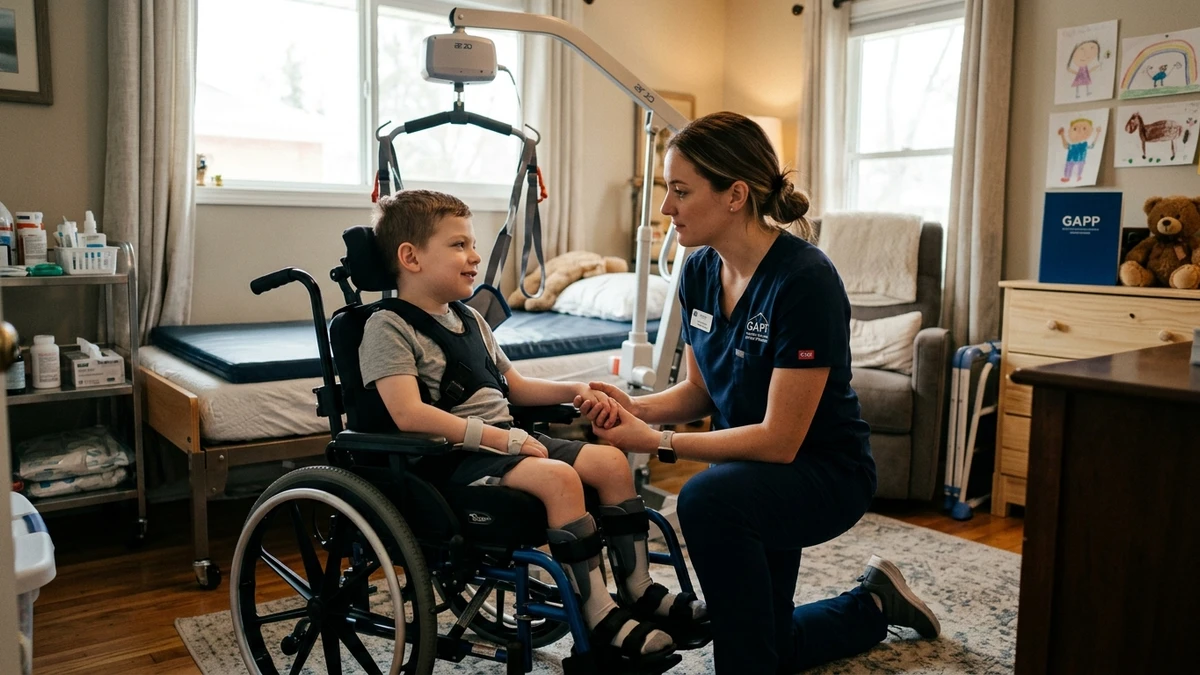
- Can my child hold their trunk upright and bear any weight today?
- Is pain, tone, or mood different from yesterday?
- Do I have a clear path, a second person, or the right device?
Nursing education sources state that clients without trunk control, or who are fully dependent, need a mechanical lift instead of a manual one. Growth is the trigger parents miss. A lift that was safe at 25 pounds may not be at 60, and the switch point arrives quietly, much like a car tire that wears down a little each week until the tread is gone.Pediatric factors make the call harder than any workplace lifting page suggests. Spasticity can surge mid-lift. Behavior varies by the day. Children with limited mobility may also have fragile hips or bones.Know what a gait belt does. It guides a cooperative child and never lifts one. Pulling under the arms strains your shoulders and can injure your child.
Safe Lifting Techniques for a Disabled Child With Equipment
The core mechanics are the same ones the Canadian Centre for Occupational Health and Safety teaches: wide stance, bent knees, load held close, no twisting, smooth motion. They pay off most in the transfers you repeat daily, such as crib to changing table, wheelchair to car seat, and bed to shower chair.For a child with a G-tube, trach, or ventilator, follow an equipment-first sequence. This is a general safety order, so always defer to your child’s nursing care plan. Families who manage
G-tube feeding will recognize why feeds get paused before anyone moves the child.
- Secure all tubing and circuits so nothing can tug.
- Clamp or pause feeds as the care plan directs.
- Confirm suction and emergency supplies are within reach.
- Only then, lift.
Pro Tip: Rehearse the route before the lift. Clear doorways and cords first, because a child in your arms is the wrong moment to find an obstacle.
Repositioning a ventilated or trach child without pulling on the circuit takes a second set of hands. One person manages the tubing while the other moves the child. Pivot your feet instead of twisting your spine, and set the bed or changing surface at waist height.
When Your Own Back Becomes the Risk
Daily transfers, often at night, add up over years of growth. When a parent is hurt, the child’s care is at risk too. Caregiver strain is a continuity problem, not only a parent problem.
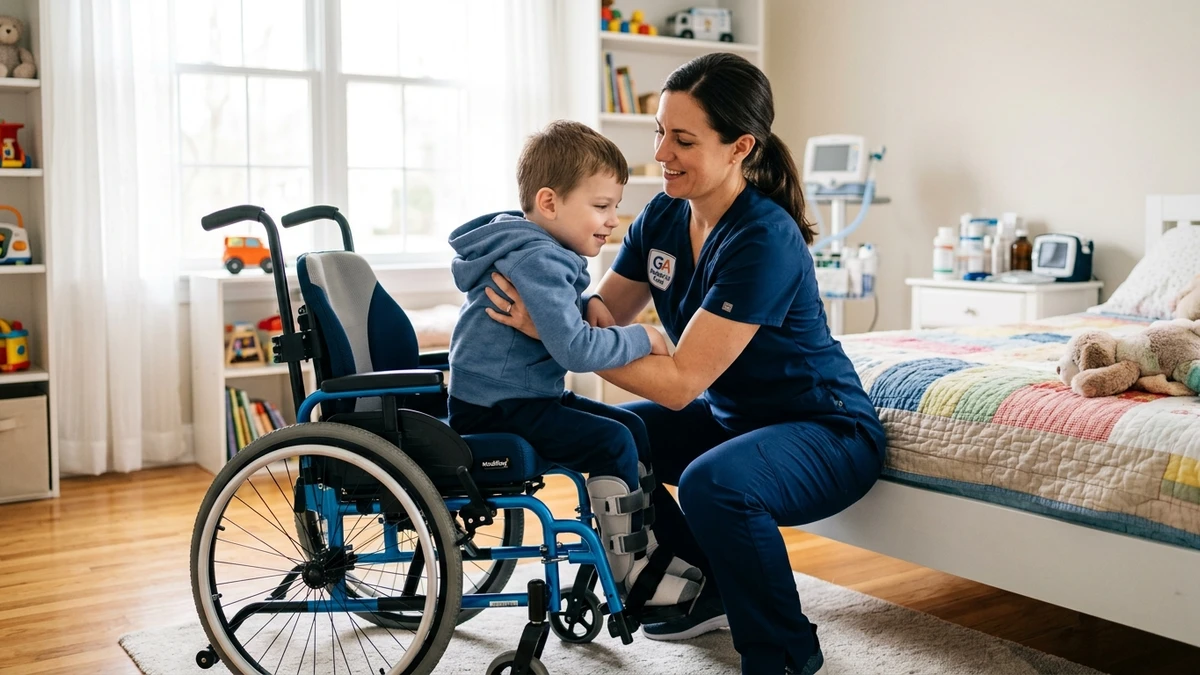
Watch for these warning signs:
- Recurring back or shoulder pain
- Avoiding transfers you used to do easily
- Lifting alone because no one else is trained
Trained support changes the picture. Under the Georgia Pediatric Program (GAPP), eligible children from birth to age 21 can receive skilled and unskilled nursing at home, so transfers, repositioning, and personal care can be shared with trained staff.
Respite care options give exhausted parents scheduled breaks from lifting altogether.
SLB In-Home Care provides skilled and unskilled nursing, at no out-of-pocket cost once approved by Georgia Medicaid, for medically fragile children through the
GAPP Medicaid program, including GAPP Application Assistance if you are unsure where to start.Occupational or physical therapy referrals can help with equipment fitting. When lifting needs change after a procedure, Post-Surgery Care and Consulting can adjust the plan. If daily transfers are wearing you down,
See If Your Child Qualifies and find out whether shared lifting is within reach. Safe lifting techniques for a disabled child work best when no parent has to carry the load alone.
Frequently Asked Questions
What is the safest way to lift a child with cerebral palsy or low muscle tone?
Assess trunk control and tone first, then keep the child close with a wide stance and bent knees. Use a mechanical lift or a second person if tone surges or weight-bearing is limited.
When should I switch from manual lifting to a mechanical lift?
Switch when your child lacks trunk control, is fully dependent, or has grown past what you can move without twisting or strain. Ask a therapist to help time the change.
Can a gait belt be used to lift my child?
No. A gait belt guides a cooperative child during a transfer and must never be used to lift. Lifting under the arms is also unsafe.
Will GAPP nurses help with lifting and transfers at home?
GAPP-funded in-home care includes mobility and transfer help for eligible children ages 0-21. Your nursing team can build these tasks into the care plan.
Related Guides