Learn how GAPP approves muscular dystrophy home nursing care in Georgia, what documentation reviewers need, and how care plans change as MD progresses.
A diagnosis letter alone gets a GAPP application denied. A functional decline note, documenting exactly how a child’s condition has changed in the last three months, gets approved within weeks. That gap already shows up in how prior authorization reviewers read Duchenne and Becker cases across Georgia, and it means the paperwork strategy matters almost as much as the diagnosis itself.Muscular dystrophy home nursing care in Georgia, secured through the Georgia Pediatric Program, depends less on which type of MD a child has and more on how well the medical record shows the disease progressing. Here’s what that actually means for your care plan.
Key Takeaways- GAPP authorizes skilled nursing based on documented functional decline, not a static MD diagnosis code
- Duchenne, Becker, congenital, and limb-girdle types progress on different timelines, each needing a different care plan
- Pulmonologist and neurologist notes carry the most weight in prior authorization decisions
- Care hours typically increase as ambulation decreases and nighttime ventilation begins
- We offer free skilled and unskilled nursing through GAPP for children ages 0-21
How Muscular Dystrophy Actually Changes What Nursing Care Looks Like
Treating muscular dystrophy as one condition is the first mistake most families make when building a care plan. Duchenne muscular dystrophy, the most common childhood form, typically shows symptoms early and moves through predictable stages of muscle weakness. Becker MD progresses slower. Congenital and limb-girdle forms vary widely depending on the specific genetic subtype.
Early Stage Versus Later Stage Care
Early-stage care centers on prevention:
- Fall risk monitoring and mobility aid training
- Stretching routines to delay contractures
- Nutrition support while swallowing muscles stay intact
- Physical therapy coordination
Later-stage care shifts toward respiratory and feeding support. This is where BiPAP management, cough assist devices, and G-tube feeding nursing care enter the plan. A pediatric pulmonologist’s functional assessment, showing declining forced vital capacity, is what triggers GAPP to authorize these higher-acuity skilled tasks.The care plan isn’t set once at diagnosis and left alone. It gets revised as pulmonary function and swallowing ability change, sometimes every few months during faster-progressing stages.
What Gets a Muscular Dystrophy Case Approved for GAPP in Georgia
Most denied applications share one problem: they lean on an old diagnosis letter instead of current functional data. Think of it like renewing a driver’s license with a ten-year-old photo. Technically accurate, practically useless. GAPP reviewers want evidence of change, not just confirmation that a child has MD.
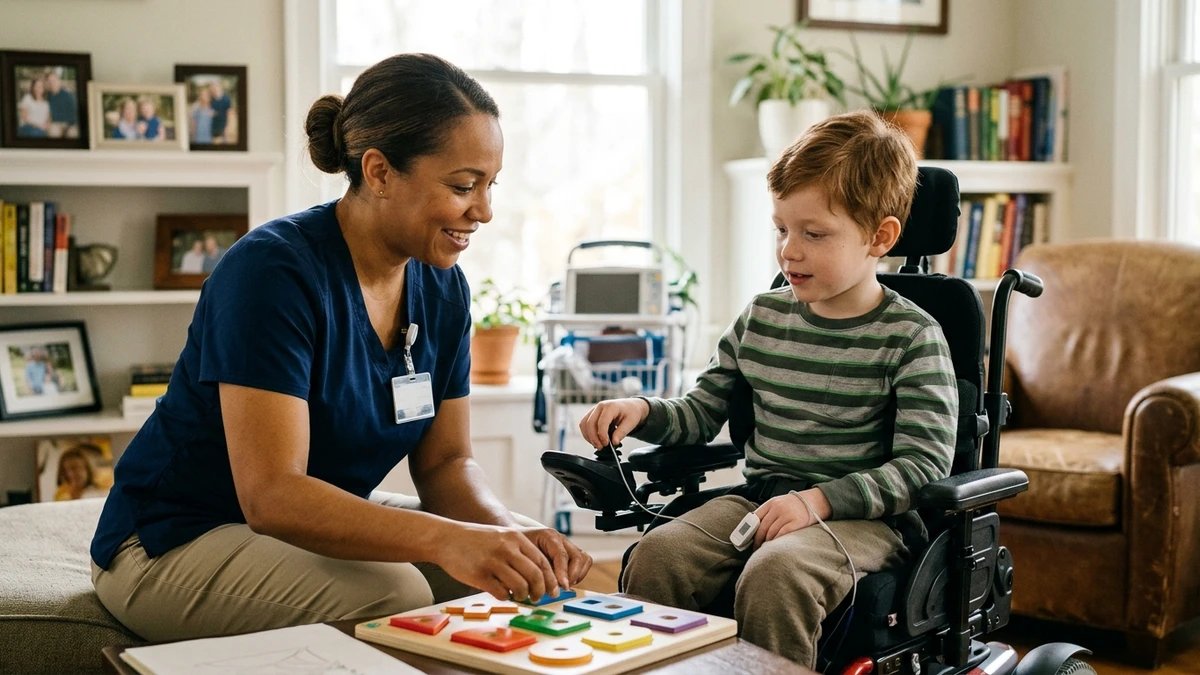
Ask your neurologist to document specific functional milestones, such as loss of independent ambulation, decline in forced vital capacity, or new swallowing difficulty, rather than general progress notes. Specific numbers move faster through prior authorization than vague summaries.The physician orders that carry the most weight come from:
- Pediatric neurologist — establishes the diagnosis and tracks motor function decline
- Pulmonologist — documents respiratory capacity and justifies BiPAP or cough assist orders
- Physiatrist — supports mobility equipment and contracture prevention plans
Respiratory equipment orders strengthen a skilled nursing request considerably. A BiPAP prescription paired with a pulmonologist’s note showing declining respiratory function gives reviewers concrete medical necessity language, not just a diagnosis code.Georgia’s Medicaid provider manual outlines the documentation standards GAPP reviewers apply, and families preparing an application benefit from reviewing
preparing medical records for GAPP before submitting anything. This is one area where GAPP application assistance shortens the back-and-forth that delays so many families.
Skilled Nursing Tasks a Muscular Dystrophy Home Care Plan Actually Includes
A GAPP-authorized nurse for a child with muscular dystrophy handles tasks that go well beyond basic supervision. These are skilled, licensed tasks:
- Tracheostomy care and suctioning
- Ventilator or BiPAP monitoring overnight
- G-tube feeding and medication management
- Post-surgical wound care after spinal fusion or tendon release
Skilled Versus Unskilled Support, and Why Both Matter
Unskilled personal care covers transfers, bathing, and positioning to prevent contractures. These tasks matter just as much but don’t require a nursing license. Most families need both types of support running side by side throughout the day, not one or the other. Reviewing the difference between
skilled vs non-skilled pediatric care helps families understand which tasks their child’s plan should include as MD progresses.Post-surgery care applies directly here. Spinal fusion and tendon release procedures become common as MD progresses, and recovery requires close monitoring for infection, pain management, and mobility retraining at home.Care hours scale up in a fairly predictable pattern: as ambulation decreases and nighttime ventilation begins, GAPP typically authorizes more overnight skilled nursing hours to manage respiratory risk while the child sleeps.Families planning further ahead may also want to look at how
Long-Term Home Nursing Care needs shift as a child moves from ambulatory to respiratory-dependent stages.Enrollment data from
Georgetown University’s Center for Children and Families shows how many Georgia children rely on Medicaid coverage for exactly this kind of ongoing, condition-specific care. Muscular dystrophy home nursing care in Georgia sits squarely inside that coverage, provided the paperwork keeps pace with how the disease moves.If your child has muscular dystrophy and Georgia Medicaid coverage,
See If Your Child Qualifies for GAPP-funded nursing built around how their condition actually progresses, not a generic checklist.
Frequently Asked Questions
Does a muscular dystrophy diagnosis alone qualify a child for GAPP in Georgia?
No. GAPP requires documented medical necessity, meaning a physician must show functional decline or specific skilled care needs, not just confirm the MD diagnosis exists.
How often does a GAPP care plan get reviewed as MD progresses?
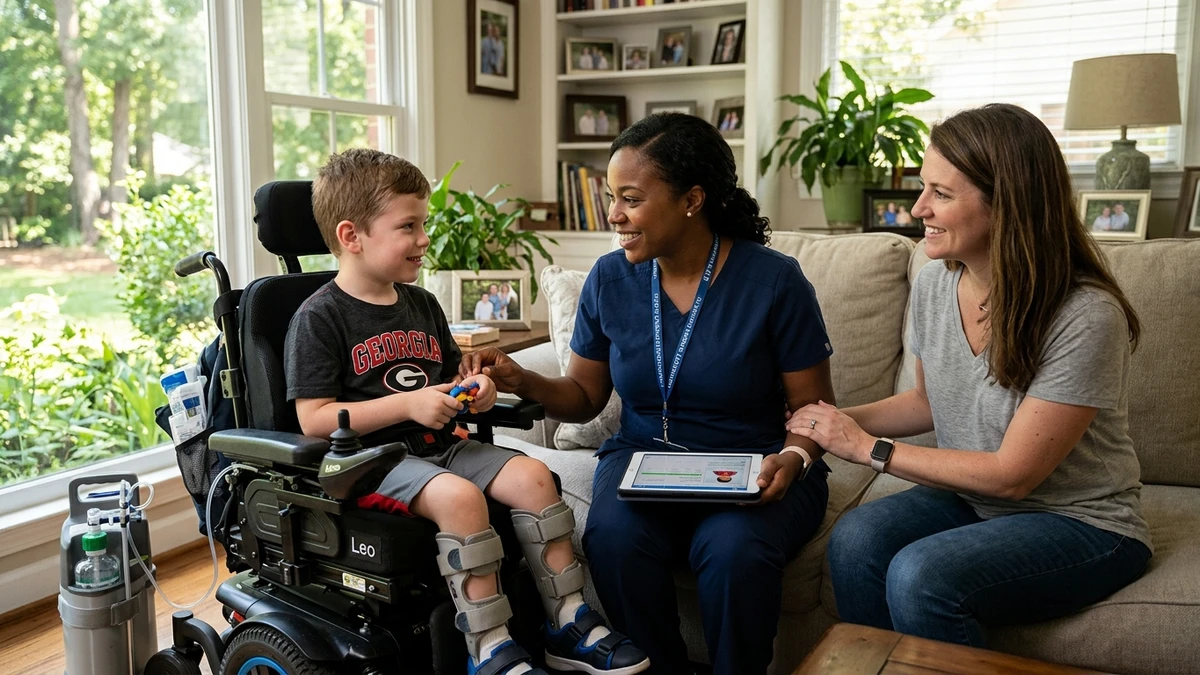
Care plans are reassessed as the child’s condition changes, particularly after new physician assessments showing respiratory or mobility decline. Families should update documentation whenever a specialist notes a functional change.
Can a family request more nursing hours after a hospitalization or surgery?
Yes. Post-surgical recovery, such as after spinal fusion, often justifies a temporary increase in skilled nursing hours with proper physician documentation.
What happens if a child ages toward 21 while still needing skilled nursing support?
Families should start planning the transition well before age 21, since GAPP eligibility ends at that age and adult Medicaid pathways work differently. Discuss transition timing with your care coordinator early.
Related Guides