Monitoring devices were used by 46% of children in a 498-child pediatric epilepsy cohort, and false alarms were the most common reason families skipped them, cited by 28% of nonusers (Lutz et al., Epilepsia Open, January 2026). That finding frames the whole decision.
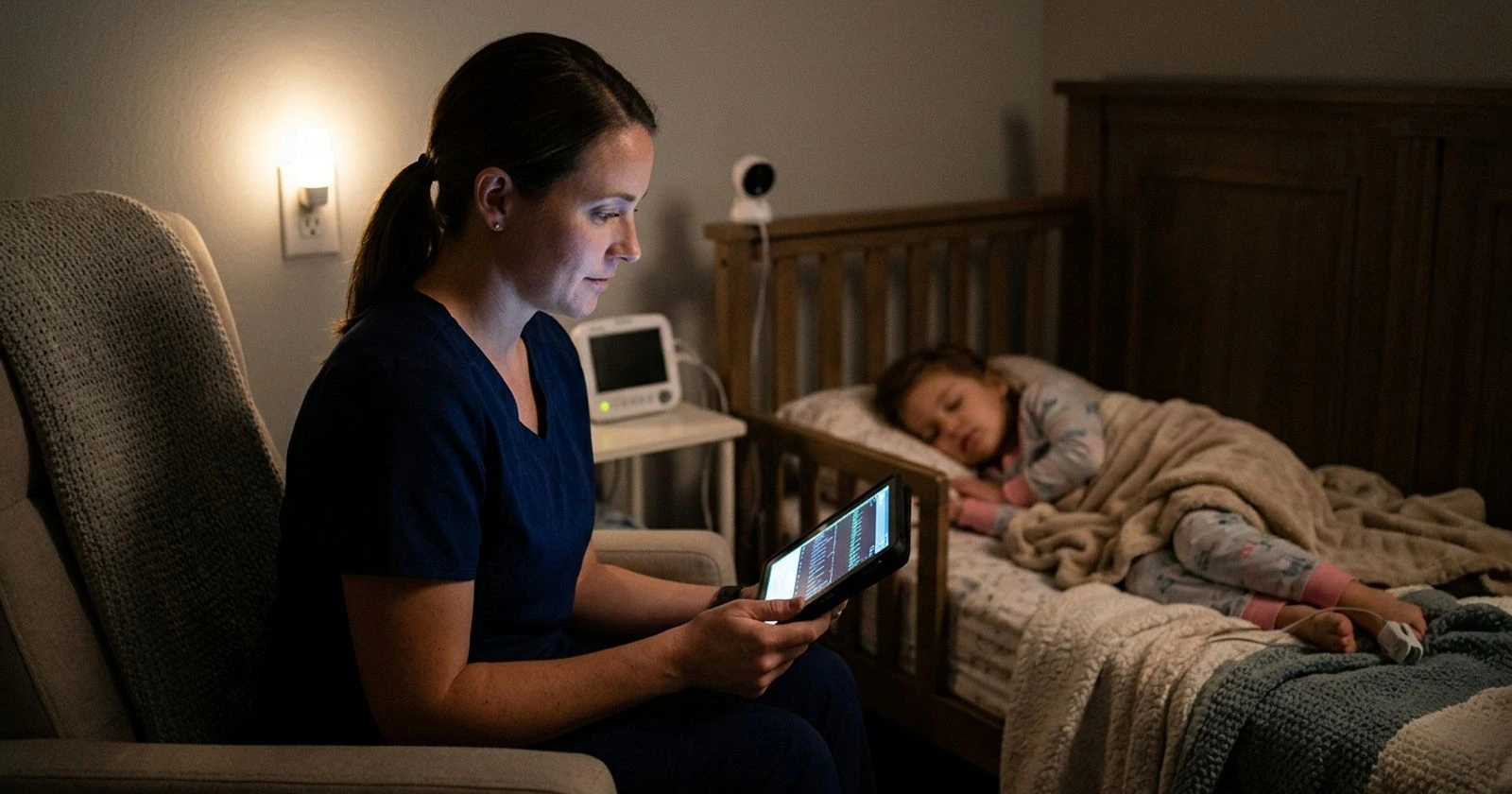
Nighttime monitoring for pediatric epilepsy works only when the tool fits the child's seizure type, the family keeps using it, and a trained person responds the same way every time.
No device watches for every seizure, none is proven to prevent SUDEP, and the safest plan pairs the right equipment with a written response workflow and, for medically fragile Georgia children, possible nursing support through GAPP.
Before You Start
- Your child's current seizure types, as named by their neurologist
- The written seizure action plan, including rescue medication and dosing
- Your child's age, since device clearances differ by age group
- A list of who lives in the home and who can answer an alarm overnight
- Your child's Medicaid status and any current physician orders for home care
Table of Contents
- What Nighttime Monitoring for Pediatric Epilepsy Can and Cannot Catch
- Why Do Families Turn Alarms Off?
- Build an Overnight Alarm Response Workflow
- Overnight Nursing Support Through GAPP in Georgia
- Frequently Asked Questions
What Nighttime Monitoring for Pediatric Epilepsy Can and Cannot Catch
No single tool covers every seizure type. Each tool does a different job, and mixing them up is where families get into trouble.
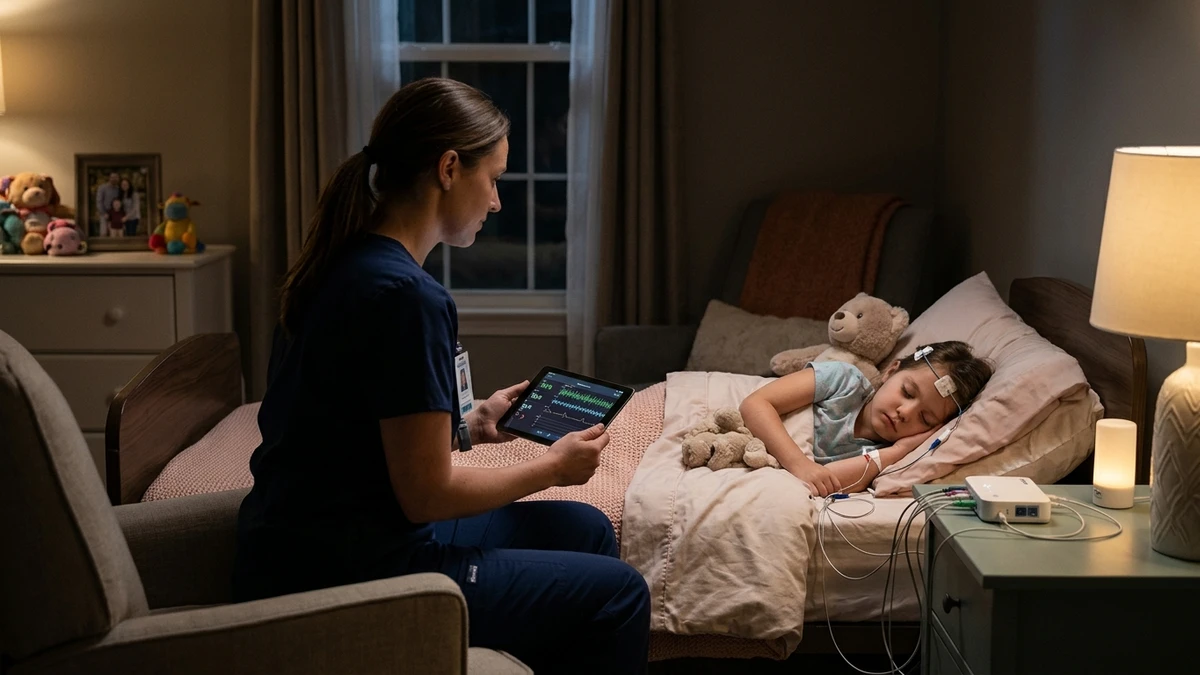
- Clinical video-EEG diagnoses and characterizes seizures, but it only captures events that happen during the test.
- A home video monitor gives you a visual check. It shows you the room but does not detect a seizure.
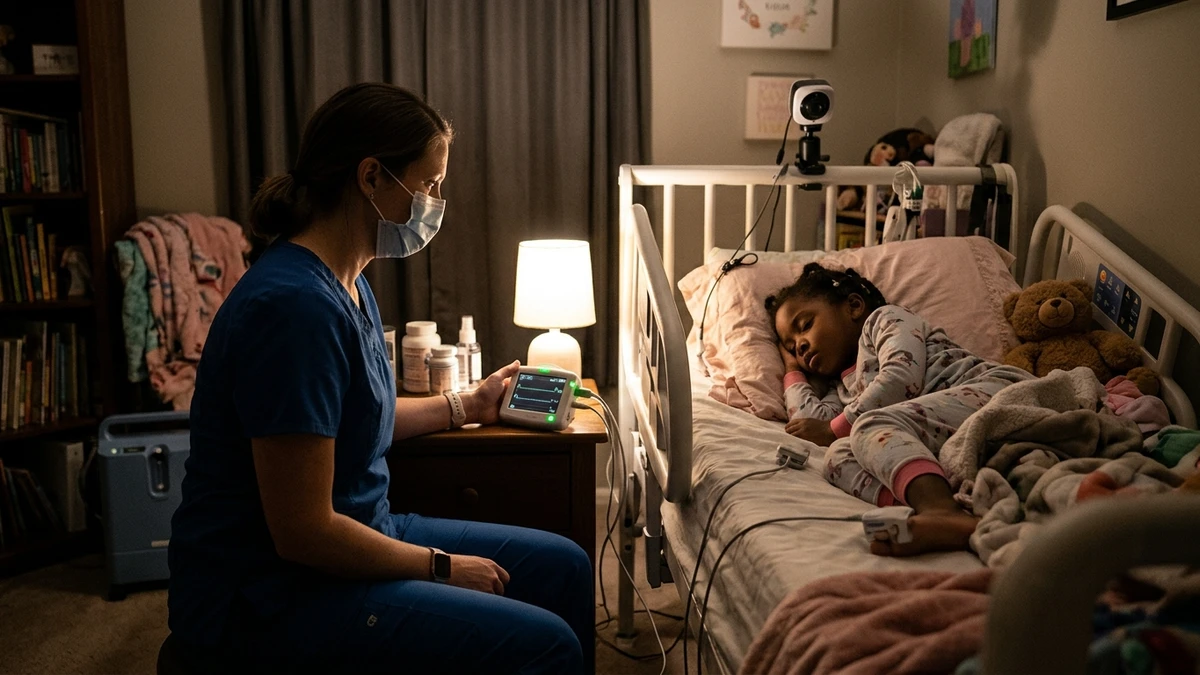
- A pulse oximeter reports oxygen and heart rate changes. It does not identify a seizure.
- A wearable detector senses movement or heart-rate patterns and sounds an alarm.
- Direct nursing observation puts a trained person awake in the room, watching.
Think of it like a smoke detector versus a security camera. One raises an alarm when a specific signal appears. The other only helps if someone is looking at the screen.
Match the tool to the seizure type
Movement-based sensors suit convulsive events: generalized tonic-clonic, focal-to-bilateral tonic-clonic, clustered or prolonged tonic, and hyperkinetic seizures. Quiet events, such as absence seizures, some focal seizures, and other nonmotor events, produce little movement for a sensor to read. A device built for convulsions will not reliably catch them. Ask the neurologist which of your child's seizures a given tool was designed to detect.
A short age decision path
- Under 4: NightWatch+ is not cleared for this group. Review options with your neurologist, which may mean video checks plus direct observation.
- Ages 4 to 16: NightWatch+ is described by its manufacturer as FDA-cleared for nocturnal motor seizures in this range. Its upper-arm sensor tracks movement and heart rate, and a bedside alarm station alerts caregivers without a smartphone or Wi-Fi.
- Older adolescents: Wrist-based options such as EpiMonitor, described in a 2026 technology review for ages six and older, may apply. Fit still depends on seizure type.
What the evidence does not show
A 2026 pediatric SUDEP risk-management study of 498 children states that no evidence currently proves overnight seizure monitoring prevents SUDEP. The manufacturer of NightWatch+ reports 98% sensitivity for tonic-clonic seizures, 90% across major motor seizure types, and 0.07 false alarms per hour. Treat those as manufacturer figures. Results shift with seizure type and the population studied.
Why Do Families Turn Alarms Off?
An alarm that sounds for nothing teaches a household to stop trusting it. Alarm fatigue is a safety problem, not a minor annoyance.
An analysis of 2,876 alarms from 65 children ages 3 to 16 found that 30% of false alarms occurred between 6:00 and 9:00 a.m. The likely cause is ordinary waking, stretching, and morning movement. Bring that pattern to your care team and ask when to remove or silence the device after your child wakes.
When the alarm sounds but your child looks asleep
Do not assume it is false. Walk to the bedside and run a quick check:
- Breathing: Is the chest rising normally?
- Color: Are the lips and face a normal color?
- Muscle tone: Is the body relaxed, or stiff or jerking?
- Responsiveness: Can you rouse your child with voice or gentle touch?
If anything looks wrong, follow your neurologist's written plan.
Pro Tip: Treat the first month with a new device as a data-gathering period. Log every alarm with the time and whether a seizure occurred. A written log turns "it goes off constantly" into a pattern your neurologist can act on.
Questions to ask before buying or requesting a monitor
A more sensitive device will sometimes alarm without a seizure. That is the tradeoff, and the real decision is whether your household can live with it. Ask the neurologist:
- Which of my child's seizure types does this device target?
- Who was it validated on, and does my child match?
- What is the realistic false-alarm rate?
- Who responds, and how fast?
- Where does the data go, and who sees it?
- Does it fit the plan already prescribed for my child?
Build an Overnight Alarm Response Workflow
Set this sequence in writing with your neurologist before the first alarm, not during it. Decisions made at 3 a.m. by an exhausted parent rarely go well.
Your written plan should settle:
- Who is alerted when the alarm sounds, and who is the backup if they do not wake.
- Who goes to the bedroom, and what they do first.
- How the start time is noted, since duration drives every later decision.
- When rescue medication is given and when to call 911. Mass General Brigham guidance points to calling when a seizure lasts more than 5 minutes.
- Safe positioning, a low sleeping surface, and cleared hazards around the bed.
Should someone stay awake all night?
A monitor that alerts a sleeping caregiver is different from a trained person who is awake and observing. The first depends on someone waking, finding the room, and thinking clearly. The second is continuous observation.
Sleep-deprived caregivers are themselves a safety risk, so a plan that relies on one parent running on no sleep for months has a built-in weakness. A 2026 JMIR study found that caregivers also want a contact person when problems occur at night.
Document and escalate
Record the time, duration, movements, color, breathing, and recovery. Bring the log to the next neurology visit. Set one clear rule: call the neurologist for changes in pattern, and call emergency services for the situations your written plan names.
Printable checklist structure
- Alarm time: ____ Seizure start: ____ End: ____
- Movements / color / breathing: ____
- Rescue medication given (drug, time): ____
- 911 called: yes / no
- Recovery notes: ____
- Who was notified: ____
- Morning handoff completed by: ____
Overnight Nursing Support Through GAPP in Georgia
A pediatric home nurse can stay awake and observe, respond according to the physician's orders, give prescribed medications within the scope of the order, and document events. A nurse does not diagnose seizures or prevent SUDEP. Nursing does not replace the neurologist's plan or your monitoring equipment. It adds a trained observer to both.
The Georgia pathway
- A physician order for in-home care.
- Active Medicaid.
- Medical fragility, as assessed for the program.
- Authorization of hours under the Georgia Pediatric Program (GAPP) for children ages 0 to 21.
Hours and service codes depend on authorization. The Georgia Medicaid EVV page lists GAPP code 971, with skilled nursing codes S9123 and S9124. No outcome is guaranteed, and device reimbursement is a separate question.
Skilled versus unskilled overnight care
Skilled nursing covers clinical tasks such as medication administration and clinical observation. Unskilled personal care covers daily support without those clinical tasks, and our guide to skilled vs non-skilled pediatric care explains the difference in detail.
Your neurologist's seizure plan can be shared with the nursing team so the same protocol runs in your home every night. SLB In-Home Care provides free skilled and unskilled nursing for medically fragile children through the GAPP Medicaid program, along with application assistance and consulting for families starting the process.
Your Georgia nighttime seizure plan
Put the pieces together: the neurologist's written rescue protocol, the monitoring equipment chosen for your child's seizure type and age, a family coverage schedule with named backups, and GAPP nursing support where authorized. That combination is what makes nighttime monitoring for pediatric epilepsy dependable rather than hopeful.
For background, read our post on pediatric seizure management at home and our walkthrough of how the GAPP application works. To find out whether your child may qualify for overnight help, See If Your Child Qualifies.
Frequently Asked Questions
Should someone stay awake all night with a child who has epilepsy?
It depends on your child's seizure risk and what your neurologist advises. A monitor can alert a sleeping caregiver, but only a trained person who is awake provides continuous observation. Ask your neurologist which level fits your child.
Can a baby monitor or camera tell whether my child is having a seizure?
No. A camera lets you look at the room but does not detect seizures. Some video systems respond to movement or sound, so check live viewing, recording, notifications, and pediatric suitability before relying on one.
Can a pulse oximeter detect a seizure?
No. It reports oxygen and heart rate changes, and current literature separates that from validated detection of specific seizure types. Do not use it as a substitute for a seizure detector or observation.
Which nighttime seizure monitor works for a child under age 4?
NightWatch+ is described as FDA-cleared for ages 4 to 16, so it does not cover younger children. Review options with your neurologist, who may suggest video checks combined with direct observation.
What should I do when a seizure alarm goes off but my child looks asleep?
Go to the bedside and check breathing, color, muscle tone, and responsiveness. If anything looks wrong, follow your neurologist's written plan, including rescue medication and calling 911 when it directs.